
KAMMAK Journal / Glassware guide
Choose stemmed wine glasses if you want a place to hold the glass without touching its bowl. Choose stemless wine glasses if you prefer a tumbler-style grip and a lower profile that fits your cupboard. Then compare the actual bowl, dimensions, and care instructions: the presence of a stem does not settle every buying decision.
Stemmed vs stemless: six practical differences
A stemmed wine glass has a bowl raised above a foot by a stem. A stemless wine glass brings the bowl down to the table, so you hold the body itself. Both categories include different shapes and sizes. Compare two actual glasses, rather than assuming that all stemmed glasses are tall or all stemless glasses are compact.
| Consideration | Stemmed wine glass | Stemless wine glass |
|---|---|---|
| Where you hold it | The stem gives your fingers a place below the bowl. | Your hand holds the bowl, much like a drinking tumbler. |
| Contact with the bowl | A stem grip keeps your hand off the bowl and limits fingerprints there. | Handling leaves direct hand contact with the bowl; set it down between sips. |
| Cupboard fit | Check total height, including the stem and foot. | A lower-profile model may suit a low shelf; still check its widest diameter. |
| Space at the table | Allow room for both the foot and the bowl above it. | Allow room for the full width of the bowl, not just its contact point with the table. |
| Washing and handling | Follow the product’s care directions; avoid twisting the stem while polishing. | No stem to handle, but the rim and bowl still need care. Check dishwasher suitability. |
| The look you prefer | Choose the raised silhouette if it suits your place settings. | Choose the tumbler silhouette if you prefer a shorter visual line. |
On a narrow screen, scroll within the table to compare all three columns.
What changes when you hold and taste the wine?
A stem offers a practical separation between your hand and the bowl. Wine educator Madeline Puckette explains that holding the stem helps keep fingerprints off the bowl and avoids the direct warming associated with holding the bowl. With a stemless glass, she suggests holding it near its base. This is a handling difference, not a promise that one glass will maintain a particular temperature. See Wine Folly’s illustrated holding guide.
If you tend to cradle any glass by its bowl, simply buying a stemmed design will not change that habit. Try the grip before choosing a full set. Our guide to holding a wine glass explains the hand positions in more detail.
You can leave room to swirl in either style. WSET’s tasting guidance recommends a small amount of wine and gentle swirling, noting that keeping the glass on the table makes this easier. Filling a large bowl to the rim removes that useful space. Follow the technique in WSET’s guide to tasting wine.
Keep the stem decision separate from the bowl decision. A broad, rounded bowl and a narrower, taller bowl can both have stems. Once you know which format fits your routine, use our red wine glass shape guide to explore that second choice.
Choose for the evening you actually have
A small kitchen and everyday dinner
If shelf height is your main constraint, start with the available space and look for a glass that clears it comfortably. A compact stemless design is worth considering, but a wide bowl can still take up considerable shelf area. Compare how many glasses fit side by side; do not plan to stack them unless the manufacturer specifically permits it.
A table set for guests
If you enjoy the outline of stemware beside your plates, choose a stemmed style and check its footprint at a complete place setting. Add the water glass, cutlery, and any shared serving dishes before deciding how much room is available. A stemless setting is also a deliberate design choice; match the proportions to your table instead of treating one format as compulsory for entertaining.
A tasting with several wines
A stem is useful when you want to handle the glass without covering the bowl. If you are comparing wines, using matching glasses also removes one obvious difference between the servings. For casual tasting with stemless glasses, keep the pours modest, leave room to swirl, and put each glass down between sips.
A household with different preferences
You do not need to replace a comfortable favorite to make every glass match. Before ordering a larger set, ask which grip people prefer and which glasses they reach for most often. If two formats serve different routines, make sure both have a sensible storage place.
From the collection
If you choose stems, compare the silhouette too
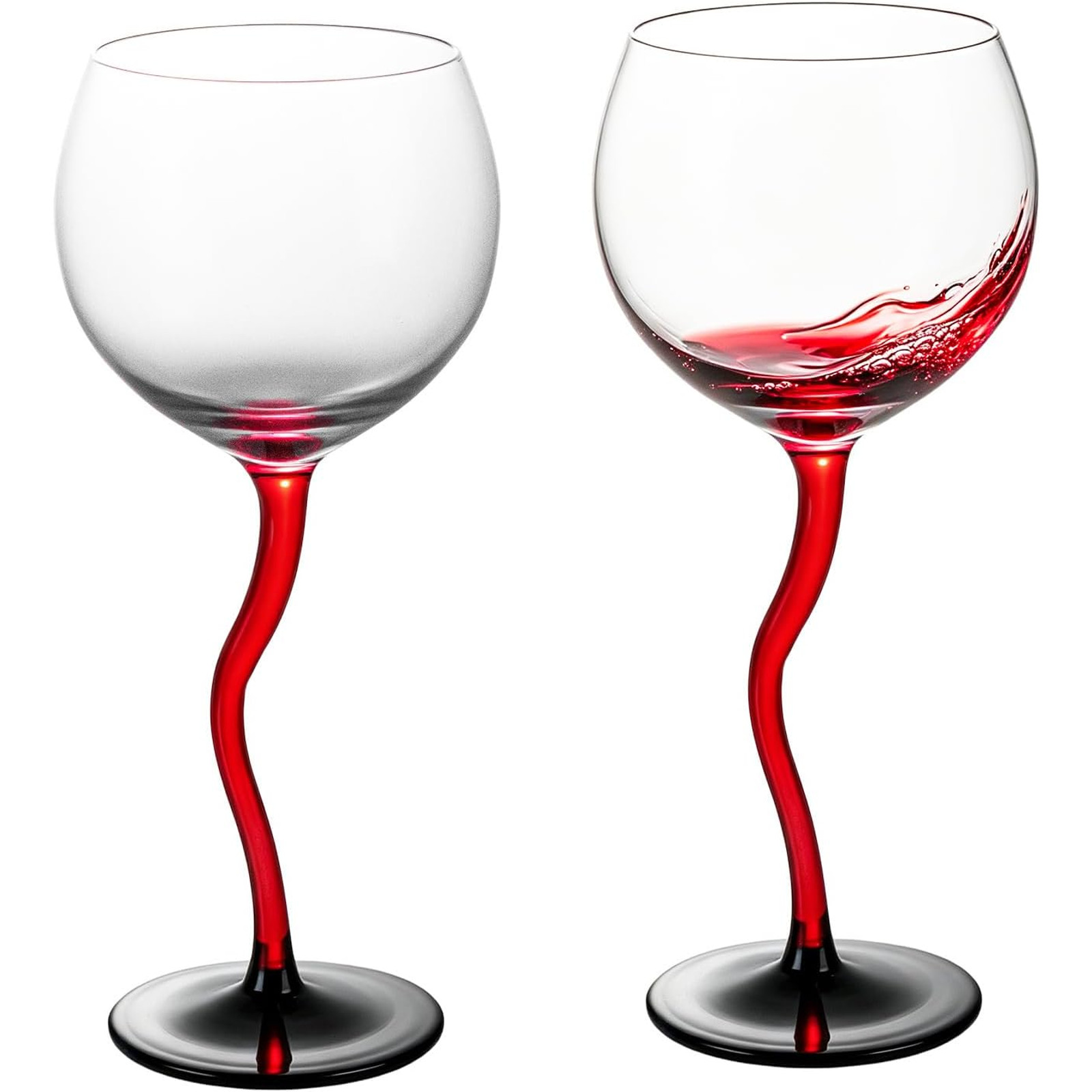
These two KAMMAK designs illustrate a further choice within stemware: a curved stem and round bowl, or a straight stem and a more angular bowl outline. Compare the product photographs with the lines of your existing tableware.
These selections are from the KAMMAK collection. Both are stemmed examples, selected for their visible design differences.
Curved stem
KAMMAK XH066 Stemmed Wine Glasses, Set of 2
Consider this design if you want a curved line beneath a rounded bowl. The stem shape makes it a useful visual comparison with straight stemware.
- Set of two glasses
- Curved stem profile
- Product care: hand wash only
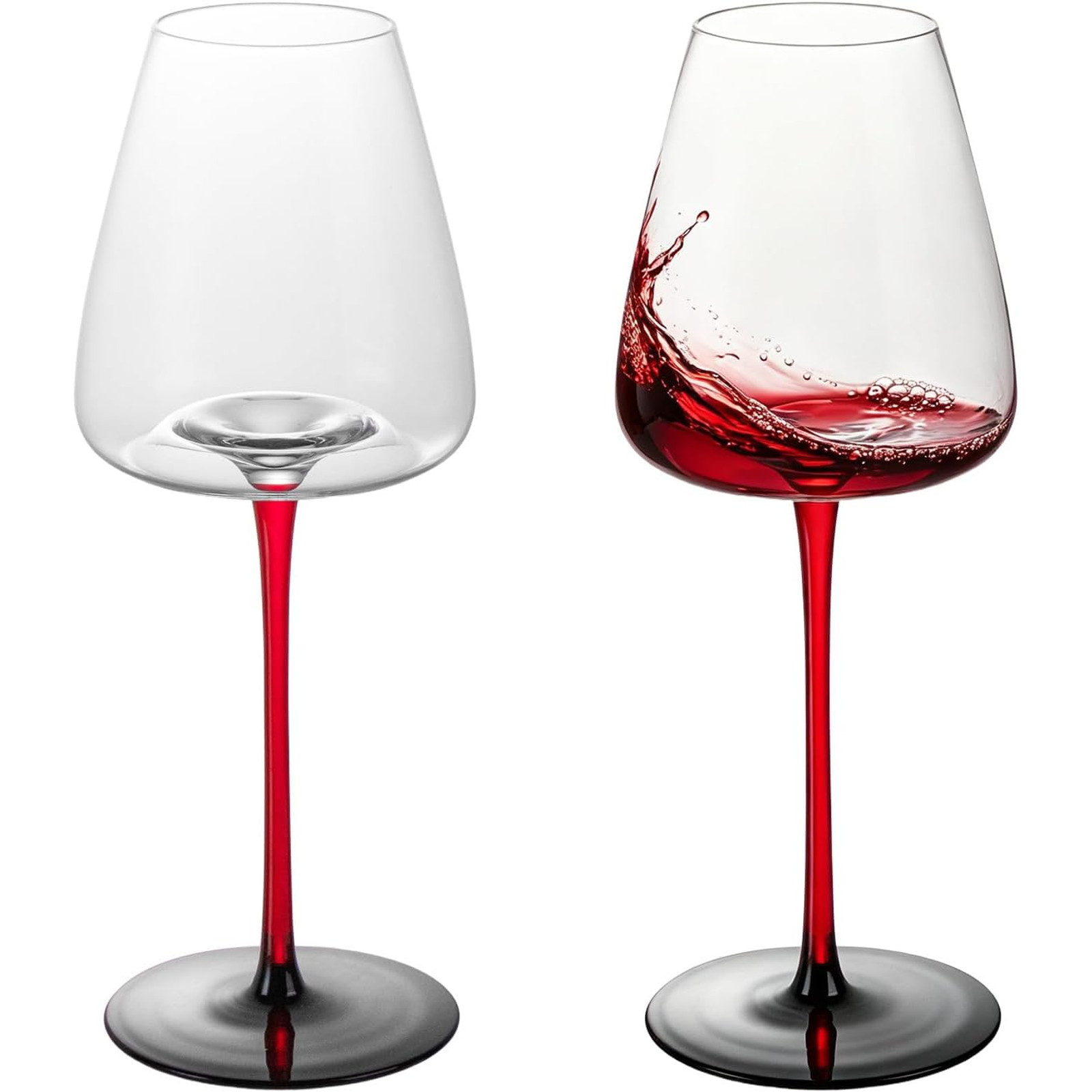
Straight stem
KAMMAK XH064 Stemmed Wine Glasses, Set of 2
Consider this design if you prefer a straight stem and a bowl that narrows toward the rim. Check the complete outline, rather than choosing on stem height alone.
- Set of two glasses
- Straight stem profile
- Product care: hand wash only
The cupboard-to-table check
Before choosing a set, follow its route through your home. This simple check turns a broad style preference into a shortlist that fits your space.
- Cupboard: measure the usable shelf height and compare it with the glass’s total height. Check the widest bowl or foot diameter, and leave room to lift the glass out.
- Hand: consider where you will grip it. If possible, try an empty example; a photograph cannot tell you whether the bowl or stem feels comfortable in your hand.
- Table: mark out the listed maximum width on paper and place it beside a plate and water glass. This checks layout only, not real-world stability.
- Washing: read the care instructions before assuming it belongs in the dishwasher. For dishwasher-approved glasses, check your appliance’s rack clearance and loading instructions.
Stemless does not automatically mean dishwasher-safe, stackable, or unbreakable. Stemmed glassware also needs careful handling during cleaning. RIEDEL’s glass care guidance advises avoiding contact between glasses in the dishwasher and avoiding twisting a stem while polishing. Always apply the instructions supplied for your particular glass.
Take your measurements to the collection
Keep your shelf height, available table space, and preferred grip beside you while browsing. Compare the full shape and care requirements of each option before choosing a set.
Explore KAMMAK wine glasses