
KAMMAK Journal / Flowers at home
The best vase for roses holds the stems without squeezing them, supports the arrangement you want, and sits securely where you plan to display it. Choose by the bouquet’s gathered width and intended height—not by the number of roses alone.
A taller vessel is worth considering when you want to preserve long stems. A lower arrangement may suit a dining table better. In either case, check the opening and interior before making the final cuts: the widest part of a vase is not necessarily where the stems must pass.

Check three things before you cut the stems
Try this sequence with the actual bouquet. It separates the dimensions that affect fit from the styling choices that affect how the arrangement looks.
1. Gather the stems where the vase will hold them
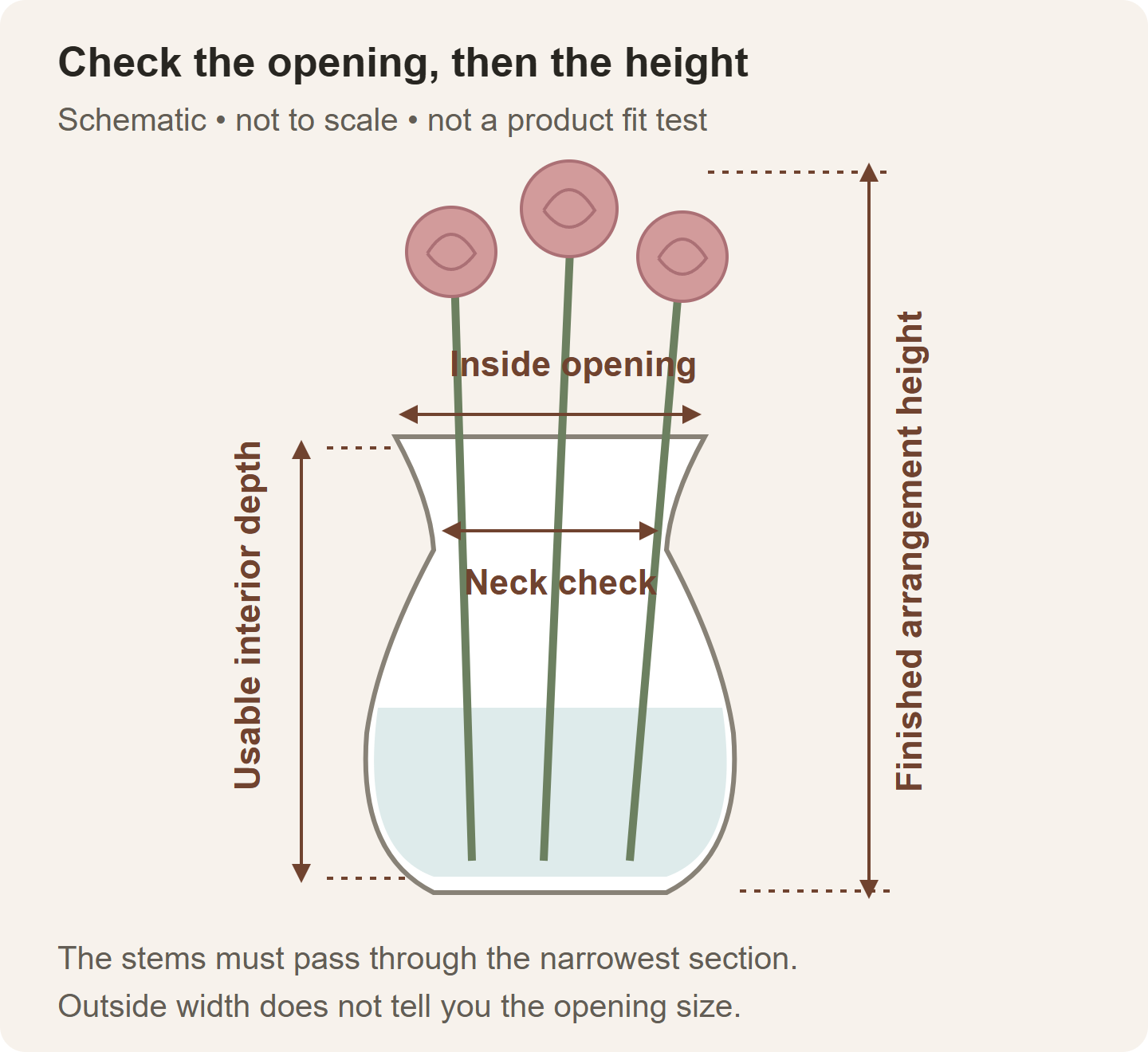
Hold the roses loosely in the shape you want. Look at the width of the stems near the intended vase rim, rather than the spread of the flower heads. Compare that gathered width with the vase’s inside opening. You should be able to insert, adjust, and remove the stems without forcing the bundle.
Also check for a narrower neck below the rim. A flared lip can look generous while the passage beneath it is much tighter. If a product lists only overall length and width, ask for the internal opening and neck measurements before relying on it for a particular bouquet.
2. Decide where the blooms should sit
Hold a rose beside the vase with its head at the height you want. Compare the remaining stem with the usable interior depth. This gives you a cutting plan without committing the whole bunch. Start conservatively; once a stem is too short, a taller vase cannot restore its length.
Measure consistently in inches or centimeters. Record vase height from base to rim, and finished arrangement height from the tabletop to the highest bloom. Mixing those two measurements makes a size recommendation difficult to use. Our vase size guide explains the broader dimensions to compare when shopping.
3. Check the space around the arrangement
On a dining table, sit down and check the view across it before settling on the bloom height. On an entry table, leave room for everyday items and keep the arrangement away from the edge. With water and flowers in place, confirm that the vase sits level and does not rock; a product photo alone cannot establish stability.
Which shape suits your roses?
Use the silhouette as a starting point, then test the fit. Two vases that look similar from the front can have different openings, interior depths, and bases.
| Your arrangement | Shape to consider | Check before choosing |
|---|---|---|
| Long stems with an upright outline | A taller straight-sided or gently narrowing vessel | Interior depth, gathered stem width, and balance with the blooms in place |
| A few roses grouped closely | A necked or smaller-opening vase | The narrowest passage must still let you insert and remove the stems easily |
| A fuller, more open bouquet | A broader opening | Whether the stems stay where you want them or spread farther than intended |
| A low dining-table display | A shorter vessel with a suitable footprint | Finished bloom height, sightlines, and access for changing the water |
On a small screen, swipe or use the focused table area to scroll horizontally.
For a loose bouquet, compare two openings before shortening anything: one that gathers the stems and one that lets them spread. This simple trial makes the difference visible without assuming every dozen roses needs the same vase.
Two KAMMAK silhouettes to compare
These selections are from the KAMMAK collection, chosen to compare their different silhouettes.
Use the photos to shortlist a style, then confirm the opening and interior measurements your bouquet needs.
Rounded body / Shaped neck
KAMMAK Colored Vase — 8HPHL049
The neck is visibly narrower than the rounded body. This is a useful shape to consider when you prefer stems gathered toward the center; check the narrowest internal passage before choosing it for your bouquet.
- Flared rim above a shaped neck
- Multicolored pattern with a green-toned lower body
Open outline / Floral pattern
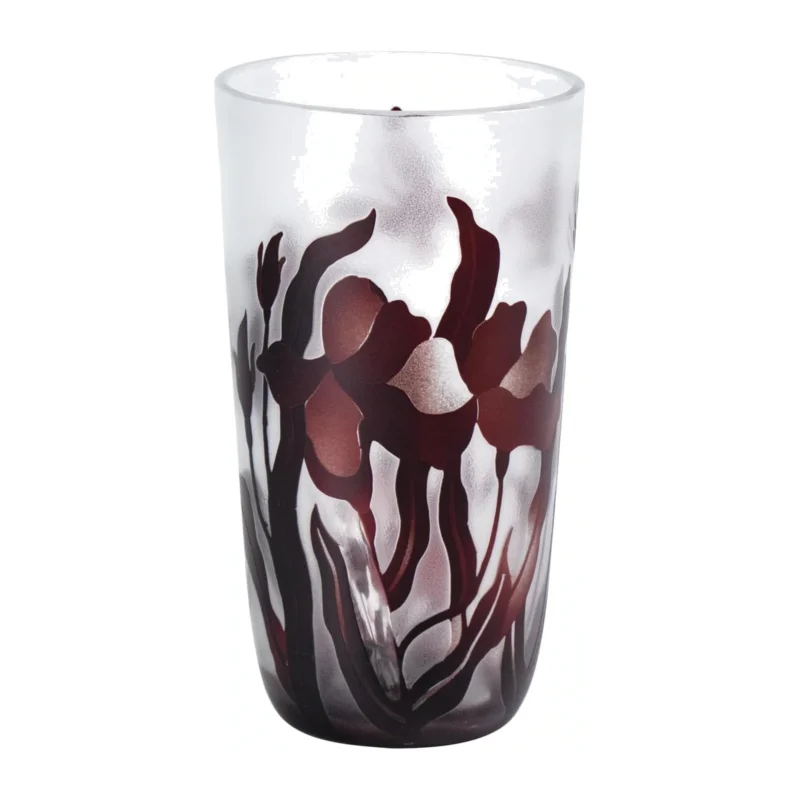
KAMMAK Floral Vase — 8HPCM024
The photographed silhouette widens gently toward the rim without the pronounced neck of 8HPHL049. Compare this outline if you want more visual room for stems to spread, while confirming the actual internal opening first.
- Gently tapered silhouette
- Dark floral motif against a pale background
Arrange the roses without losing the fit
Once you have chosen a vessel suitable for fresh flowers and water, prepare a clean work surface and keep the unarranged stems in water while you work. Adjust a few stems first, inspect the outline from the side, then bring in the remaining roses. Stop if the neck becomes crowded; dividing the bunch between two vases is an option.
Choose an opening you can clean as well as arrange through. Follow the vessel’s own care instructions, particularly for decorated finishes. Our glass vase cleaning guide covers practical cleaning considerations between bouquets.
More questions about rose vases
What size vase holds a dozen roses?
A dozen is a stem count, not a fit measurement. Stem thickness, foliage, bloom size, and how loosely you arrange the flowers all change the space required. Gather the prepared stems and compare their width with the narrowest usable opening.
Can a vase be too tall for my roses?
Yes. If the stems cannot reach the water while the blooms sit where you want them, choose a shorter vessel. Check the actual interior depth rather than relying only on the outside height.
Can I use a decorative vase for fresh roses?
Confirm that the particular vase is intended to hold water. Decorative appearance does not establish water suitability, and a photograph cannot verify it. Follow the product’s use and care information before filling it.