
A waterline, leftover flower residue, and a damaged glass surface can all make a vase look cloudy. The useful first step is to check the vase’s finish and care instructions before choosing a cleaning method.
Check the vase before washing
Empty the vase and inspect it in good light. Look for chips, cracks, repair lines, lifting decoration, or an unfamiliar change in the surface. Check the original care card and product page. A vase’s color alone does not tell you whether the color is within the glass or applied to its surface.
The Canadian Conservation Institute’s basic care guidance recommends inspection before cleaning and careful handling with both hands. For a vase, support the body and base rather than lifting by a narrow neck, decorative handle, or rim. Remove rings that might knock against the glass.
For a valuable antique, a repaired piece, or glass with loose flakes, tiny surface cracks, or unexplained droplets, pause home cleaning and consult a conservator. These conditions need assessment; they are not ordinary flower-vase maintenance.
What are you seeing inside the vase?
| Visible issue | What it may mean | Next step |
|---|---|---|
| Loose dust or dried leaves | Surface dirt or plant debris. | Remove loose material gently. Wash only if the vase and its finish permit it. |
| Residue where stems or water sat | Leftover plant material, a surface film, or deposits. | For suitable plain glass, try the gentle wash below. Recheck after drying. |
| White spots or a waterline | Minerals left by water are one possibility. | Start gently; ask the maker before using any descaling treatment. |
| Haze that remains after washing | Remaining deposits, fine scratches, etching, or other deterioration. | Stop escalating cleaners. Cleaning cannot replace damaged glass material. |
| Lifting paint, flaking, fine cracks, or new iridescence | A finish or glass surface that may be unstable. | Do not wash or rub the affected area. Seek the maker’s or a conservator’s advice. |
Mineral film is a real possibility: the U.S. Geological Survey explains how hard water can leave residue on glassware. However, a white mark is not proof of limescale. The decision table is a way to choose a cautious next step, not a diagnosis.
Choose the care route before the cleaner
Identify. Check. Then clean.
A gentle wash for suitable plain glass
Use these steps only for a sound, undecorated vase whose maker permits handwashing. Set out a padded basin, lukewarm water, mild liquid dish detergent without dyes, fragrance or ammonia, and a clean soft cloth before lifting the vase. The Corning Museum of Glass’s conservation FAQ describes mild liquid dish detergent without dyes, fragrance or ammonia and thorough rinsing for objects that can safely be washed.
- Prepare a clear work area. Line the basin with a soft mat or towel and move other glass objects aside. Wash one vase at a time so it cannot strike another piece.
- Rinse away loose residue. Use lukewarm water. Do not move a cold vase straight into hot water or pour boiling water into it.
- Clean gently. Add a small amount of mild liquid dish detergent without dyes, fragrance or ammonia as permitted by the maker. Wipe reachable, sound surfaces lightly with a soft cloth. Do not force your hand through the opening or scrub a stubborn patch harder.
- Rinse thoroughly. Remove the cleaning solution with clean water at a similar temperature. If the maker allows it, a final distilled-water rinse can reduce mineral residue from tap water.
- Dry without pressure. Pat accessible surfaces with a soft, lint-free cloth, supporting the vase securely. Let inaccessible moisture evaporate naturally; avoid forced heat and balancing the vase on a fragile rim.
- Inspect once dry. If a mark remains, use the table above to decide whether to request advice. More pressure, more heat, or a stronger product is not the automatic next step.
Waterford’s glass and crystal care guide also highlights thorough rinsing, gentle drying, and avoiding extreme temperature changes. Its instructions apply to its own products; they do not establish dishwasher or chemical compatibility for another brand’s vase.
Can a cloudy glass vase become clear again?
Sometimes a removable film is responsible. Hard water contains dissolved minerals, principally calcium and magnesium, and can leave deposits. A vase used repeatedly for flowers may also have residue around the former water level. Gentle cleaning may improve the appearance when the problem is on the surface.
Glass corrosion is different. RIEDEL’s explanation of glass clouding distinguishes deposits from changes in the glass structure and states that corrosion cannot be reversed or repaired. Household washing cannot restore material lost through etching, either. Persistent haze is a reason to reassess, not proof that one more cleaning recipe will work.
A photograph can help the maker identify the model and locate a mark, but it cannot reliably distinguish every deposit from surface damage. Include when the change appeared and which cleaning products were already used.
How should painted, gilded, or coated vases be cleaned?
Follow the instructions for that exact finish. Until they are confirmed, limit care of an intact surface to very light dry dusting with a soft brush; avoid rubbing decoration. If a surface is lifting or flaky, leave it alone. Do not assume vinegar, soaking, abrasive tools, or dishwasher cycles are suitable.
CCI Notes 5/1 distinguishes sound undecorated glass from deteriorating glass and cautions about fragile decoration. This matters when a vase combines glass with paint, gilding, glued details, or another material. A successful method for a plain vase may damage its decorated neighbor.
What about a narrow neck?
For a vase approved for washing, rinse gently without forcing a cloth, brush, or hand through the opening. Ask the maker which tool fits the interior and finish before trying to reach a stuck deposit. Do not assume loose beads, rice, or a metal implement are appropriate. If you cannot clean and rinse an area without pressure, stop and seek a suitable method.
Find care information for your KAMMAK vase
Start with the model number. For example, the product below is listed as colored glass, but its published specifications do not establish the coloring method or an approved washing procedure. Its photograph and dimensions help identify the piece; they are not evidence that a cleaning technique has been tested on it.
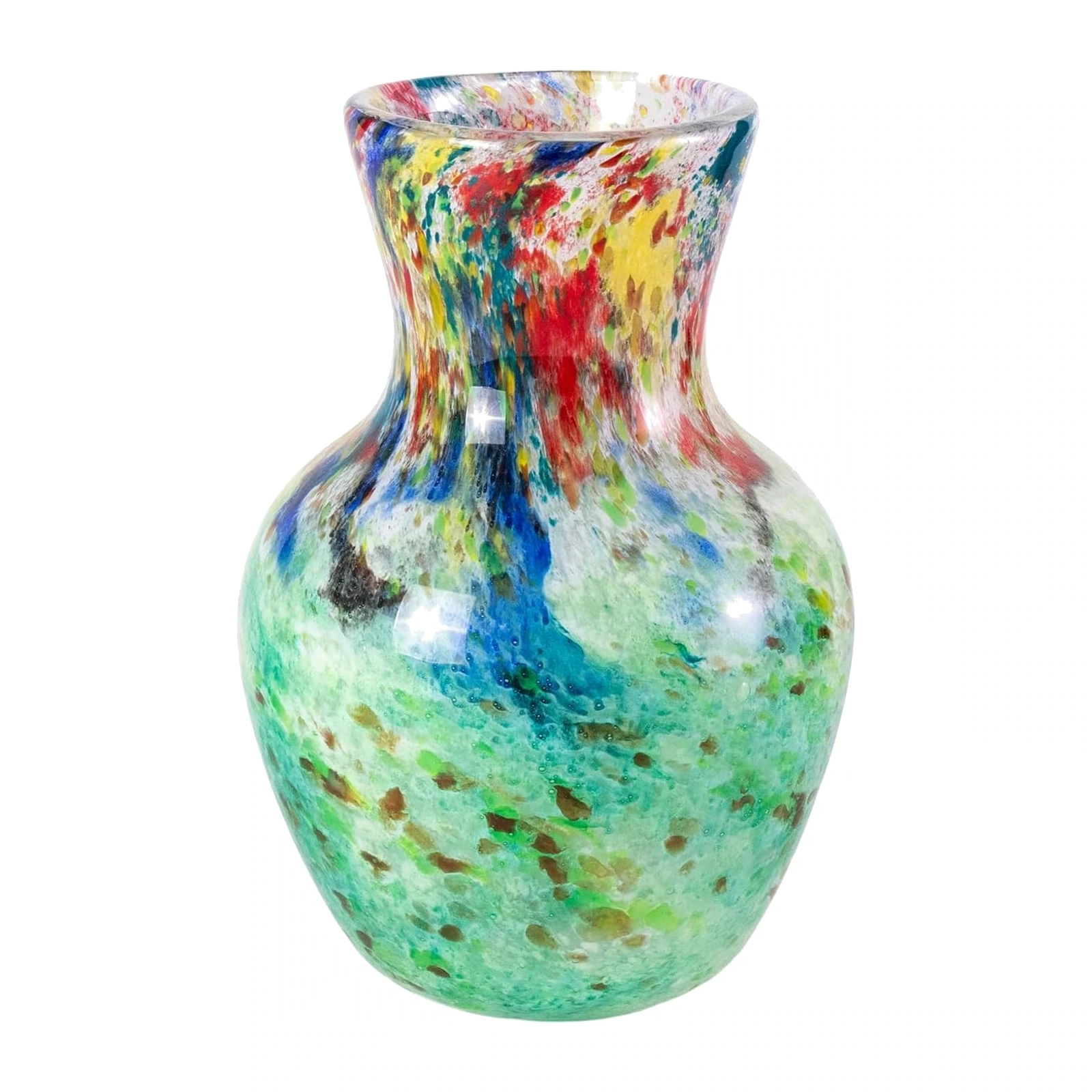
KAMMAK Colored Glass Vase — 8HPHL049
Listed dimensions: 4.9 inches long × 3.5 inches wide × 10.8 inches high. Use this model reference when requesting finish and care details.
View vase detailsContact KAMMAK for product care guidance with the model, a description of the residue, and any instructions that came with it. When choosing a new piece, compare shape and dimensions in the glass vase collection, and confirm care requirements before purchase.
Frequently asked questions
Can I put a glass vase in the dishwasher?
Only when the maker explicitly approves that exact vase and finish. Dishwasher suitability cannot be inferred from thickness, color, or the word “glass.” For an unidentified decorative vase, confirm its care instructions first.
Is vinegar the best way to remove a white ring?
Not universally. A ring may be a deposit, but its appearance does not establish the cause or the finish’s compatibility with acid. Ask for an approved descaling method rather than borrowing a recipe intended for another object.
How can I make the next cleanup easier?
For a vase approved for fresh flowers and washing, remove spent stems and clean it after the arrangement is finished. Keep its care card with the model number, rinse as directed, and let the vase dry fully before storage.