Glassware Guide · Fortified Wine
Sherry Glasses vs Port Wine Glasses: Size, Shape & Serving Guide
Sherry and Port deserve more than a tiny afterthought of a glass. This practical comparison explains the bowl, rim, stem, capacity and serving details that help fortified wine show its aroma and balance.
- Sherry glasses
- Port wine glasses
- Shape & capacity
- Serving tips
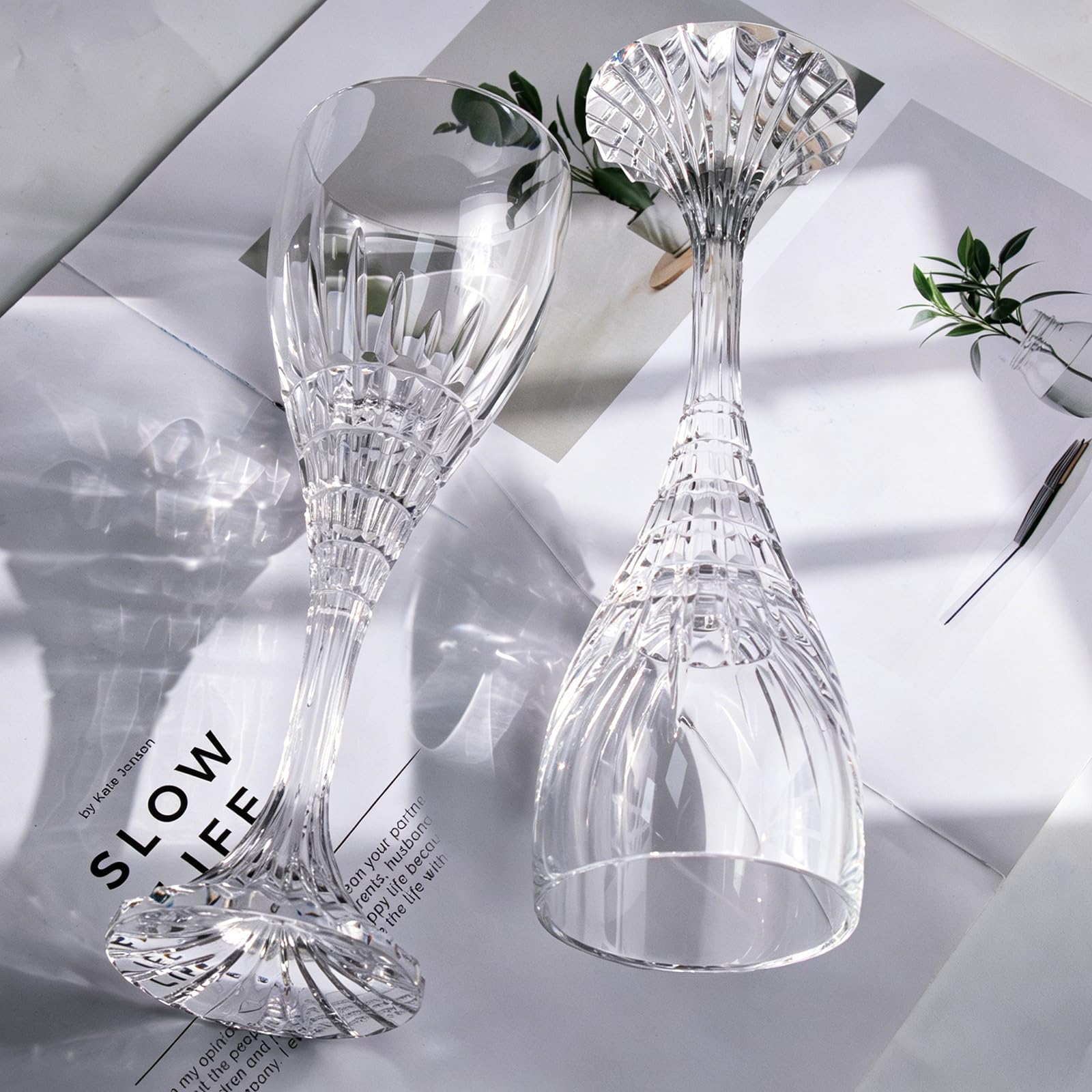
Choose a stemmed glass with a real bowl—not a miniature shot-sized cup—and enough room above a modest pour for aroma. Sherry glasses often lean toward a tulip or white-wine profile; Port glasses are commonly a little smaller but should still narrow gently at the rim. Shape and usable headspace matter more than the label printed on the box.
Start with the wine
What should a fortified-wine glass do?
A useful glass balances aroma space, a controlled opening and a comfortable stem. Fortified wines are concentrated, but concentrated does not mean they should be trapped in the smallest glass available.
Give aroma room
A gently rounded bowl leaves open air above the pour. That space helps you notice fruit, nuts, florals, spice and oxidative notes without bringing the liquid close to the rim.
Guide, do not seal
A slight taper helps direct aromas toward the nose. An extremely narrow opening can make the wine feel closed, while a very wide rim lets delicate aromas disperse quickly.
Keep a steady hold
A stem gives you a clean grip and limits hand contact with the bowl. A stable foot matters too, especially when the glass has decorative cutting or a longer silhouette.
Similar family, different emphasis
Sherry glasses vs Port wine glasses
The two categories overlap. Both typically use a small-to-medium stemmed bowl, yet Sherry benefits from more breathing room than many shoppers expect, while Port is often served in a somewhat smaller format for a concentrated after-dinner pour.
| Feature | Sherry glasses | Port wine glasses |
|---|---|---|
| Typical silhouette | Tulip, catavino or compact white-wine shape with a gently narrowing rim | Small stemmed wine shape, often rounded below and tapered above |
| Main priority | Enough bowl room for diverse styles, from fresh Fino to richer Oloroso or Pedro Ximénez | A focused, elegant vessel for a smaller serving of aromatic fortified wine |
| Useful capacity | Large enough that the pour occupies only part of the bowl; official guidance gives approximately 200 ml as a useful traditional reference | Often compact, but still large enough to swirl gently and leave clear headspace |
| Stem | A longer stem helps keep chilled styles away from warm hands | A stem keeps the presentation refined and helps control hand contact |
| Can one glass serve both? | Yes. A balanced tulip-shaped stemmed glass can handle modest pours of both, especially for relaxed home serving rather than formal comparative tasting. | |
Do not treat “Port glass” and “Sherry glass” as rigid legal shapes. When shopping, inspect the bowl width, rim taper, stem and total capacity instead of relying only on the product name.
Capacity is not a fill line
What size should you choose?
A glass’s ounce or milliliter figure is its total capacity to the brim. It is not the recommended serving amount. The practical question is whether a modest pour leaves enough empty bowl for aroma and comfortable movement.
A simple buying checklist
- Look for headspace: the wine should sit well below the widest part of the bowl.
- Check the taper: a narrower rim should focus aroma without feeling pinched.
- Consider the wine style: fresh Sherry served with food benefits from more bowl room than a very small dessert pour.
- Check balance: decorative crystal should still feel stable at the base and comfortable at the stem.
- Buy for real use: two well-made glasses may be more useful than a large set that rarely leaves the cabinet.
A calmer pour
How to serve Sherry or Port well
The glass supports the experience, but temperature, pour size and pace matter just as much. Keep the serving deliberate and adjust to the wine in front of you.
Serve Fino and Manzanilla well chilled; richer oxidative Sherries are commonly served less cold. Follow the producer’s guidance for the specific Port style.
Leave most of the bowl empty. The open space is useful for aroma and makes gentle movement safer.
Use the stem or base when you want to limit warming and keep fingerprints away from the cut crystal.
Notice appearance first, then aroma and flavor. A concentrated wine rewards smaller sips and time between impressions.
For Sherry, official guidance suggests roughly 5–7°C for Fino and Manzanilla and 12–14°C for many oxidative styles and blends. These are starting points, not a reason to ignore the bottle or your own preference.
A versatile vintage silhouette
KAMMAK Vintage Crystal Champagne Glasses
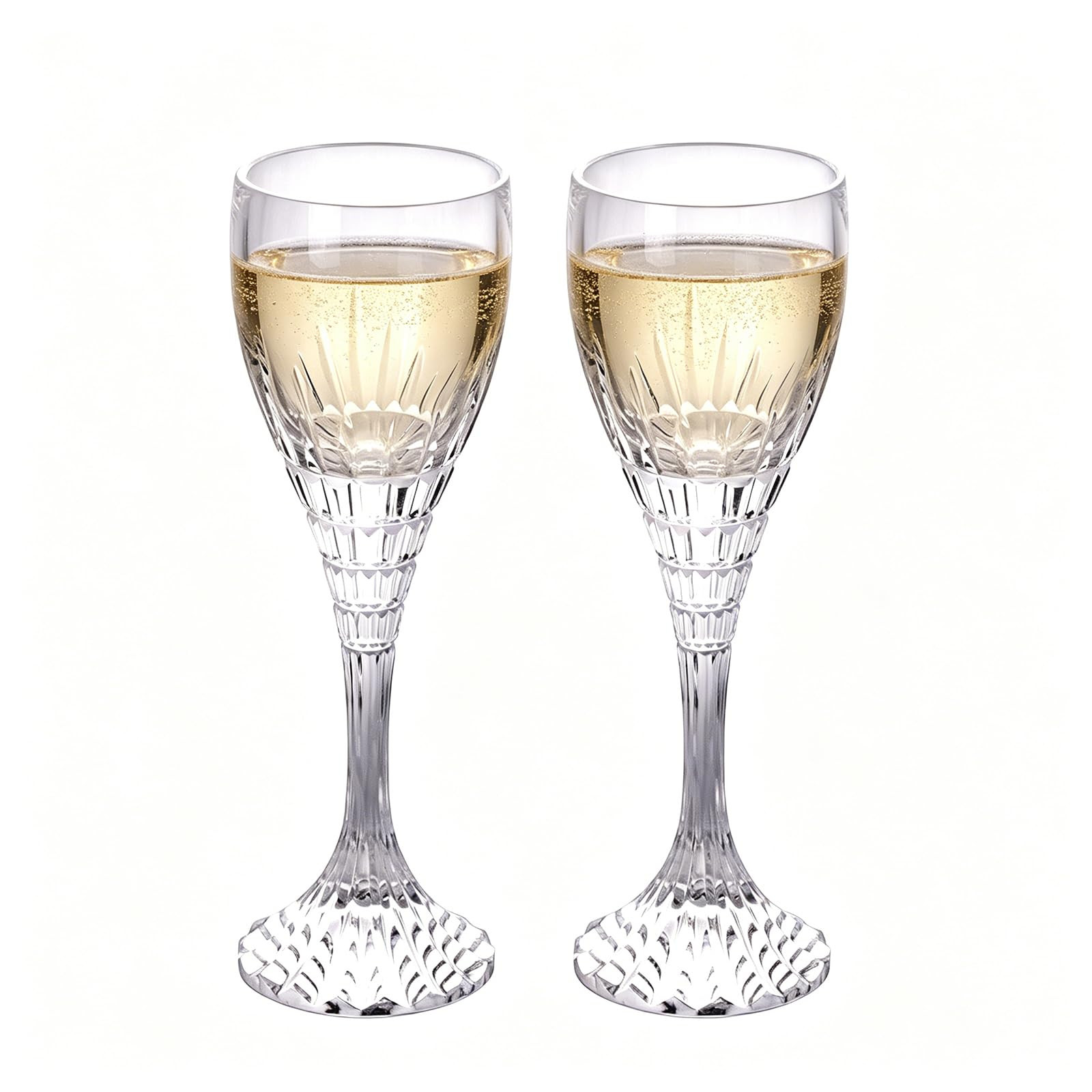
This set of two combines a gently rounded, tulip-inspired bowl with geometric cut patterns, a long stem and a 170 ml / 5.75 oz capacity per glass. Designed for sparkling wine, the compact vintage profile also suits measured pours of Sherry or Port when you want a decorative, gift-ready presentation.
- SKU 7KPSP1011
- Hand-blown crystal · set of 2
- 170 ml / 5.75 oz total capacity per glass
- Geometric cut detail through bowl, stem and base
Common questions
Sherry and Port glass FAQ
Short answers for choosing and using fortified-wine stemware at home.
Are Sherry glasses and Port glasses the same?
They can be similar and often overlap in home use. A useful shared shape is a stemmed, gently tapered bowl with enough capacity to leave aroma space above a modest pour.
Why are some Sherry glasses so small?
Small copita-style glasses are traditional, but the official Sherry Wines guidance recommends avoiding an undersized glass when you want the wine to express itself fully. A generous white-wine bowl is a strong choice at the table.
Can Champagne glasses be used for Sherry or Port?
A tulip-shaped Champagne glass can work for a small fortified-wine pour if the bowl has some width and the rim is not extremely narrow. A very slender flute offers less room for aroma.
How full should a fortified-wine glass be?
Do not fill it near the brim. Pour enough to taste comfortably while leaving most of the bowl empty for aroma and gentle movement. The listed capacity is the glass’s maximum volume, not its serving line.
Should fortified-wine glasses have stems?
A stem is useful because it offers a controlled grip and limits warming. It is especially helpful for chilled Sherry styles, though balance and comfort matter more than stem length alone.
Sources & further reading
Choose a glass that leaves room for the wine.
The best fortified-wine glass is not necessarily the smallest. Start with a balanced bowl, a gentle taper and enough headspace—then choose the craftsmanship and character you want on the table.
Explore KAMMAK 7KPSP1011