
An afternoon tea table for two or four works best when every guest has a complete place setting and the shared pieces stay easy to reach. Start with cups, saucers, teaspoons, food plates and napkins, then add a teapot and a modest serving arrangement.
The afternoon tea checklist: two people or four
This is a practical starting list for a seated tea with sandwiches or small desserts. Add utensils for the food you actually serve. The counts below describe your table, not the contents of every tea set.
| Item | For 2 people | For 4 people |
|---|---|---|
| Teacups and matching saucers | 2 cups + 2 saucers | 4 cups + 4 saucers |
| Teaspoons | 2 | 4 |
| Food plates and napkins | 2 of each | 4 of each |
| Dessert forks or spreaders | 1 per guest, if needed | 1 per guest, if needed |
| Teapot | 1 to start; check capacity | 1 to start; plan refills or another pot |
| Serving dishes | 1 shared plate or stand to start | 1 stand plus a separate platter if needed |
| Milk and sugar | Shared, according to preferences | Shared, positioned within reach |
A saucer supports the cup and gives the teaspoon a resting place. Keep a separate plate for sandwiches, cake or scones; a tea set’s saucers do not count as dessert plates. Likewise, a decorative display plate should not become a serving plate unless its instructions identify that use.
Arrange the table around the way you serve
Set the food plate in front of each chair, with the cup and saucer to its right and the napkin to its left. Treat this as an adaptable home layout: leave enough space for each guest to lift the cup without brushing a neighbor’s glass or the serving stand.
Plan the individual pieces, then the shared pieces
Two guests or four?
- 2 cups + 2 saucers
- 2 teaspoons + 2 food plates
- 2 napkins
- One shared serving area
- 4 cups + 4 saucers
- 4 teaspoons + 4 food plates
- 4 napkins
- Refills within the host’s reach
Keep the pouring position clear. Place the pot near the host; move spare food and refills to a nearby tray or sideboard when the table fills up.
For two: keep one shared serving plate or small stand between the place settings. Position the teapot near the person pouring. If the tabletop feels crowded, keep milk, sugar and refills on a nearby tray.
For four: put out all four place settings before adding shared pieces. Keep a clear route between the teapot and the cups. A sideboard can hold extra food and the second brew; guests should not have to pass a hot pot over a tall centerpiece.
After stirring, rest the teaspoon on the saucer before drinking. That small detail is supported by Emily Post’s tea etiquette guidance, which also recommends leaving the saucer on the table when seated.
Three useful pieces for a small afternoon tea
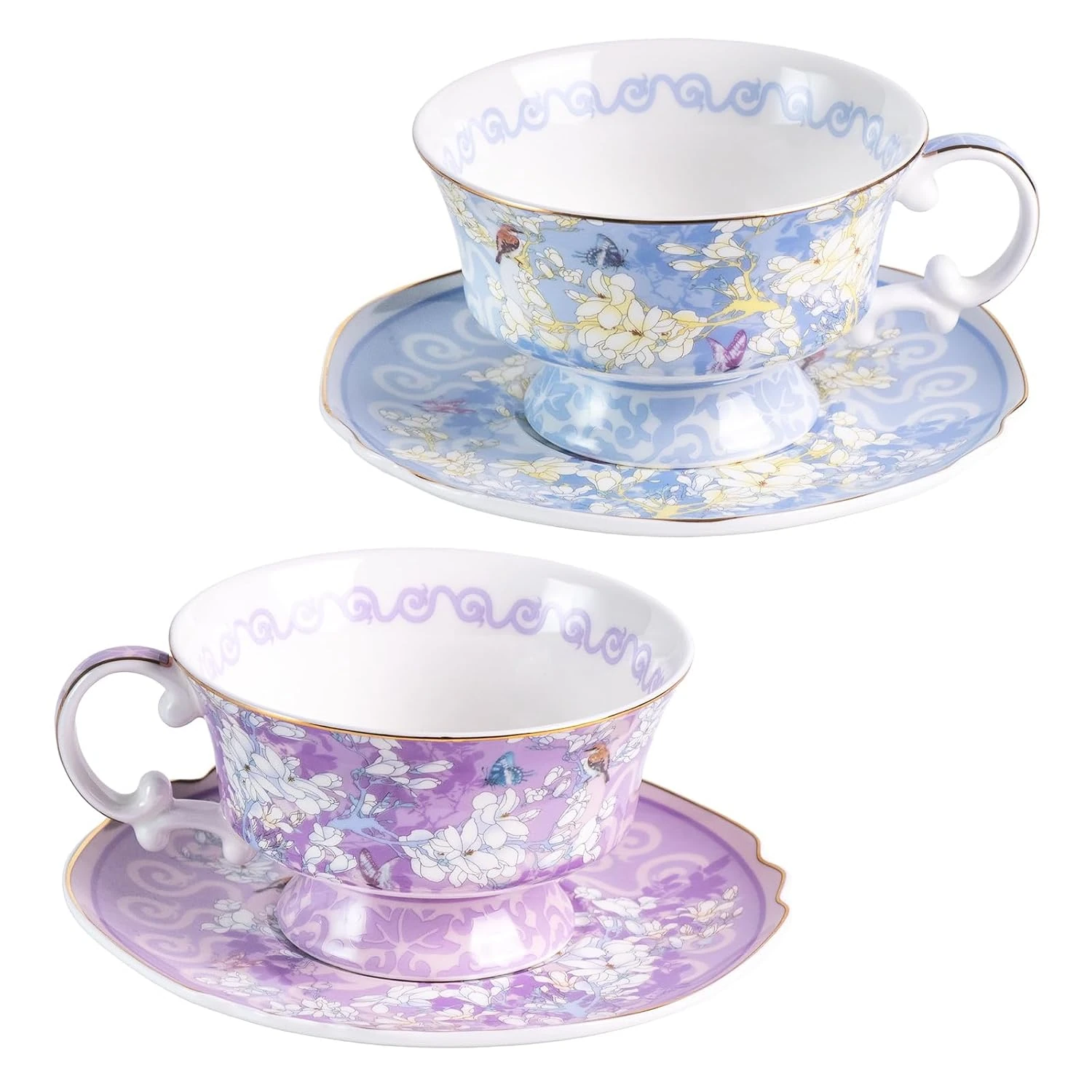
These selections are from the KAMMAK collection. They illustrate different jobs: a pair of cup-and-saucer settings, a coordinated four-person service, and a shared dessert display. Choose the pieces that fill a gap in what you already own.
For two place settings
Feather Floral Plaid cups and saucers
The set contains two porcelain cups and two matching saucers. Each cup has a listed capacity of about 9.5 US fl oz (280 ml). Add your own teaspoons, food plates, napkins and teapot to complete a table for two.
Listed capacity is not a suggested brim-full pour. Leave room for comfortable handling and any milk.
View the cup-and-saucer set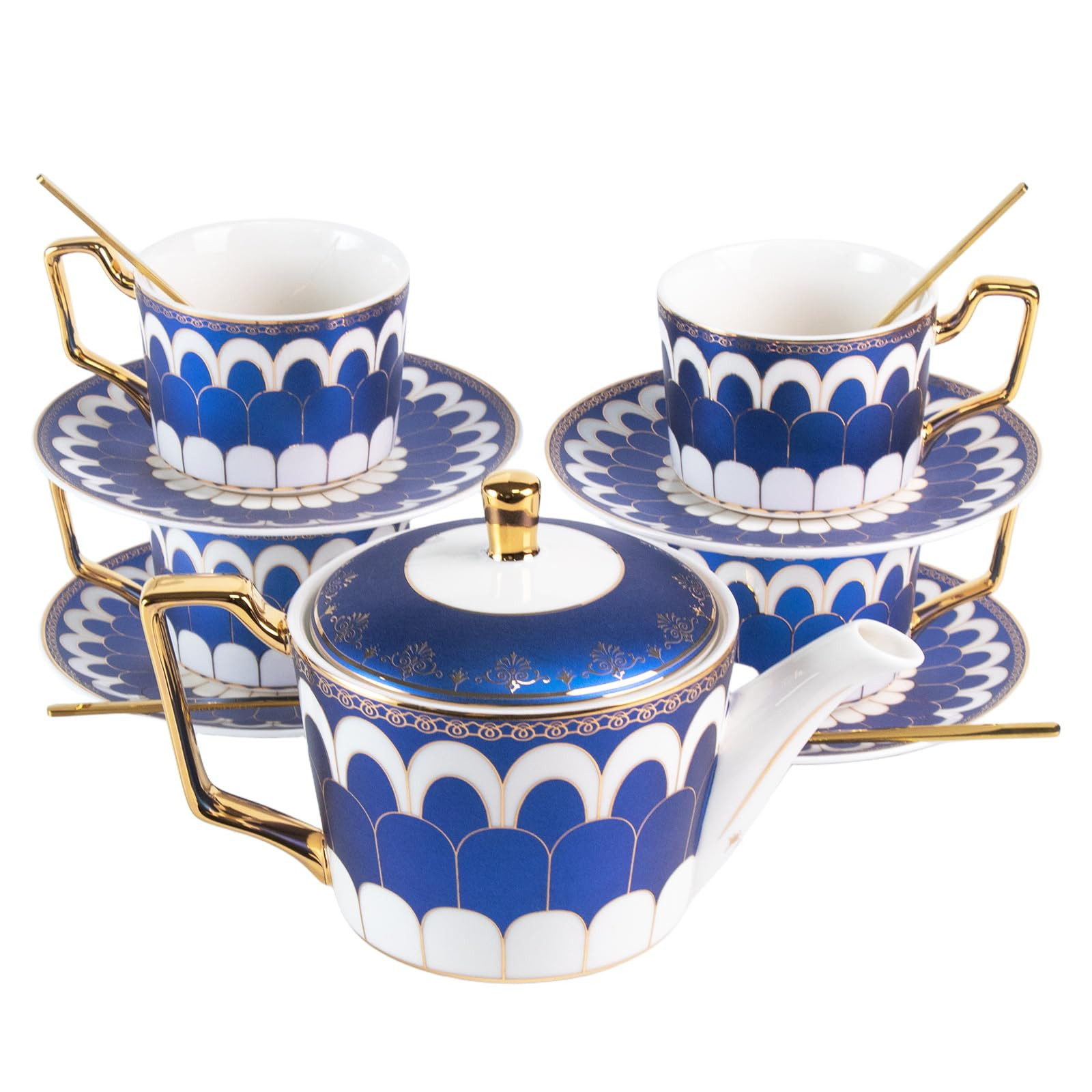
For four place settings
NX052 porcelain tea service
The listing describes a 13-piece service: one lidded teapot, four teacups, four saucers and four coordinating spoons. Add four food plates and napkins, plus utensils for your menu.
The piece count does not confirm the teapot’s usable volume. Check its capacity before planning a full first round for four.
View the four-person tea service
For shared treats
Pink two-tier porcelain stand
This stand is listed for cupcakes, desserts and fruit. Its two levels offer a way to group small treats vertically; check the plate dimensions and assembled height against your table before choosing it.
It is a shared serving piece. Keep a separate food plate at each place setting.
View the two-tier standPlan the tea and food service before adding decoration
Choose the tea around your guests’ preferences, and follow its brewing instructions. Fortnum & Mason’s home hosting guide suggests offering a choice of teas and pairing them with sandwiches, scones and small sweets. For a small gathering, you can simplify that menu rather than fill every level of a stand.
To estimate a first round, multiply the number of guests by your planned pour. At about 6 US fl oz (180 ml) per person, two pours require about 12.2 US fl oz (360 ml); four require about 24.3 US fl oz (720 ml). Totals are calculated from 180 ml per pour, with US measures rounded. These are planning examples, not the capacity of either featured tea set. Check usable pot volume, allow for brewing space, and prepare a second round when needed. Our tea cup size guide explains the difference between cup capacity and serving size.
Heat water in suitable equipment and bring the brewed tea to the table. If you are choosing between vessels, see teapot vs. kettle. Set out a strainer and somewhere to rest it if your brewing method needs one.
Offer milk and sugar when guests want them, with a separate utensil for shared sugar. Choose containers by pouring control and usable size, as explained in our sugar and creamer guide. Keep decorations low enough for conversation, then sit in each chair and check that the cup, plate and food are easy to reach.
Afternoon tea table setting FAQ
Do I need a matching tea set?
No. Coordinating cups can make the table feel cohesive, but the useful starting point is a complete setting for every guest. Check the condition, capacity and care instructions of each piece, whether it matches or not.
Does a 13-piece tea set mean it serves 13 people?
No. Pieces count the objects included. The NX052 listing identifies four cups, four saucers, four spoons and one lidded teapot, so it provides four cup-and-saucer settings.
Can a tea-for-one set serve two people?
A tea-for-one set usually centers on one personal cup and pot. An extra cup and sufficient usable pot capacity would need to be considered separately. Our teapot-for-one guide covers personal tea service; the checklist above is designed for a shared table.
Do I need a three-tier stand?
No. Use a two-tier stand, a serving platter, or dishes you already have that are intended for serving food. The menu, available table space and ease of reaching the food matter more than the number of tiers.
Start with the guest count, complete each place setting, and leave room to pour. Browse KAMMAK cups and saucers and teapots and tea sets to compare the pieces that fit your plan.