
Product Guides
A dessert cup has to work with three things: the amount you want to serve, the way a spoon enters the bowl, and the space available at the table. A capacity number helps you shortlist options; the shape tells you what to check next.
Read capacity as a container specification
A listed 7.44 US fl oz (220 mL) capacity describes the vessel’s volume. It does not tell you how much mousse to serve, how many ice cream scoops will fit, or where your finished dessert should sit below the rim. Those decisions depend on your recipe, toppings and preferred portion.
Keep three quantities separate: the cup’s listed capacity, the amount of dessert you intend to serve, and the space you want above it. A large berry garnish or an angled cookie can change the presentation without adding much measurable liquid volume.
For unit comparisons, NIST lists one US fluid ounce as approximately 29.57 mL. Fluid ounces measure volume; they are not ounces of food by weight. The paired figures below are rounded product specifications.
Compare four sizes from the KAMMAK collection
These selections are from the KAMMAK collection. All four are glass dessert cups sold in sets of two. The table brings their listed capacities and approximate overall dimensions together so you can compare them before considering color or decoration.
| Cup | Capacity | Width × height |
|---|---|---|
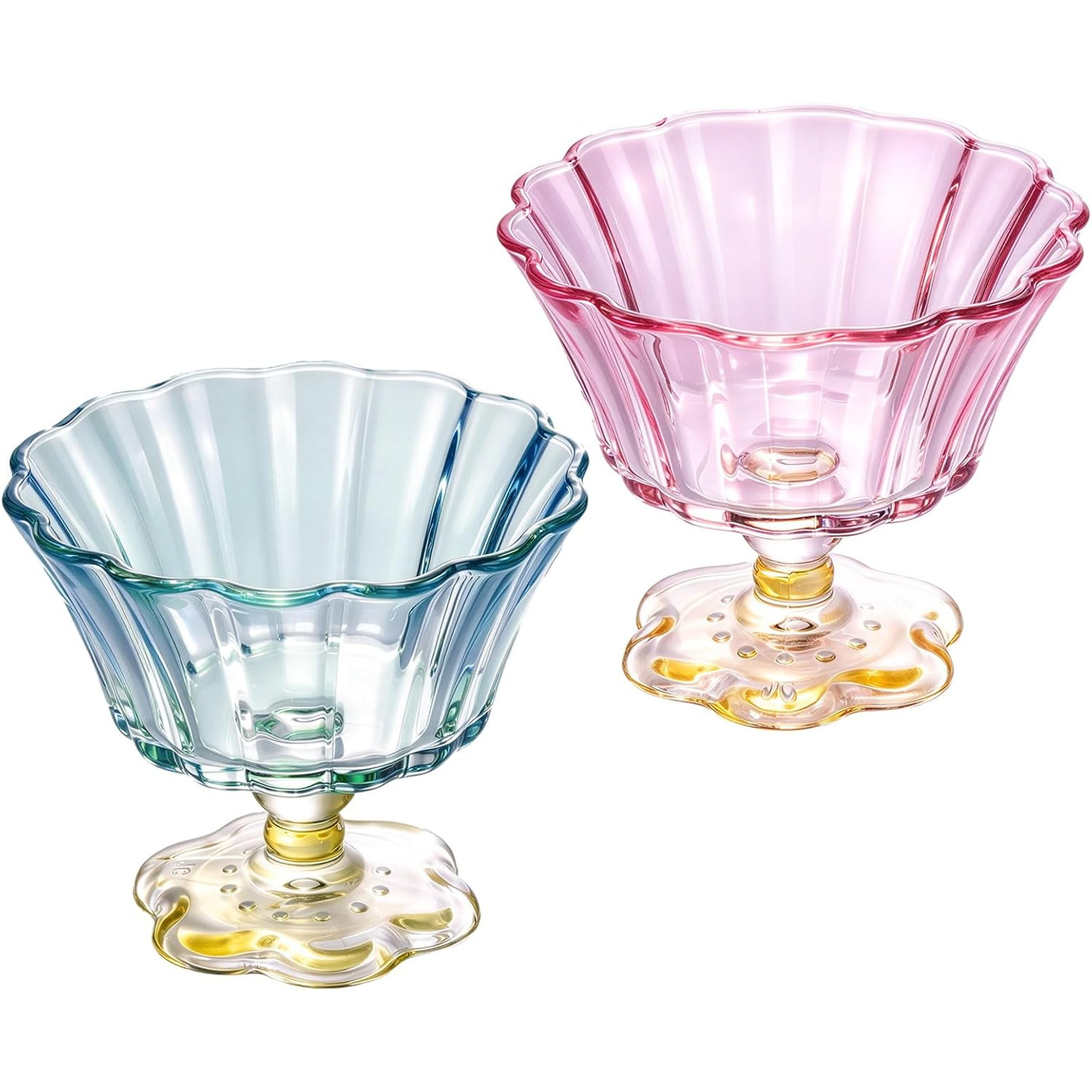
| Gradient Cloud, LWS013 | 6.76 US fl oz (200 mL) | 4.25 × 3.54 in (10.8 × 9 cm) |
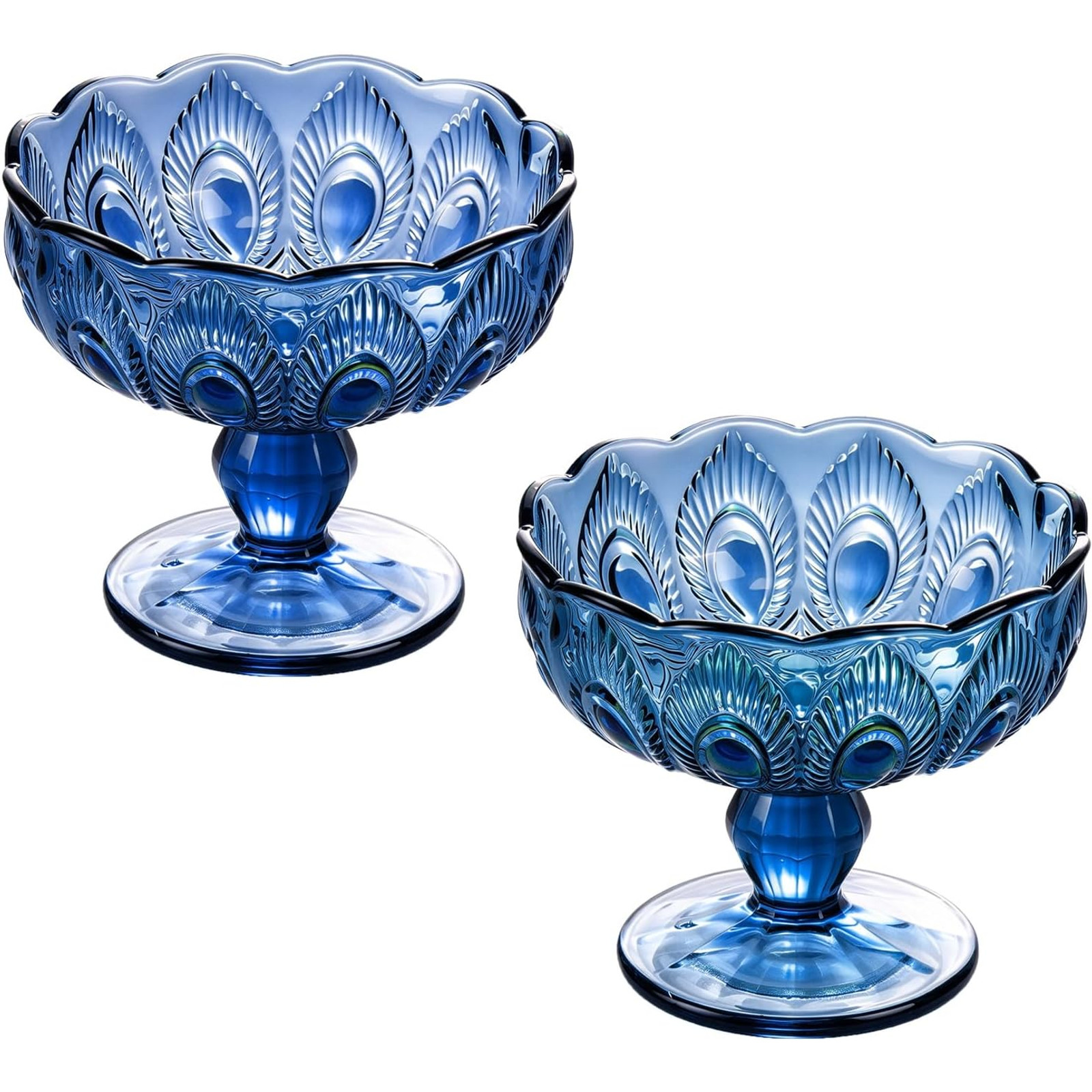
| Blue Embossed, LWS002 | 7.44 US fl oz (220 mL) | 4.02 × 3.46 in (10.2 × 8.8 cm) |
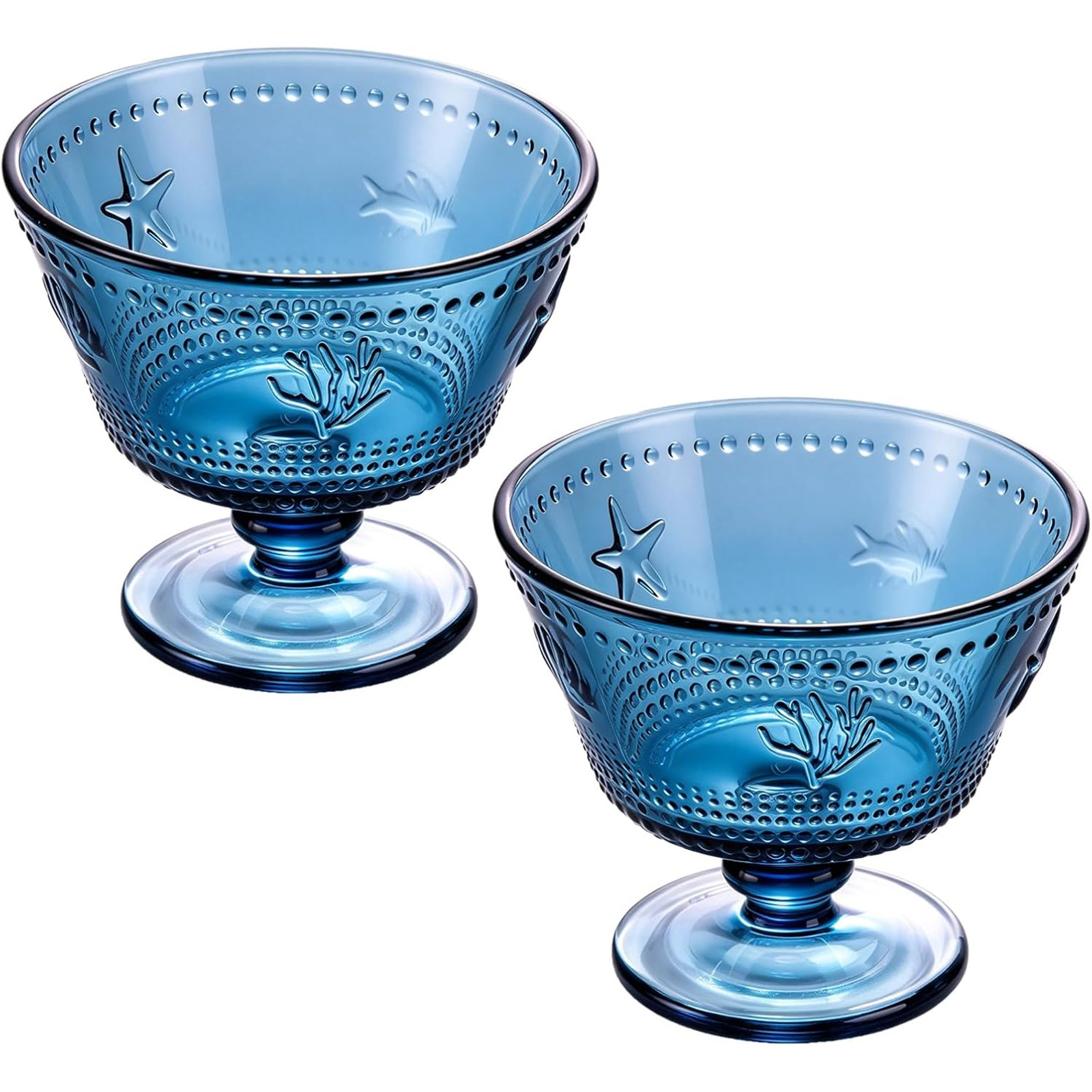
| Navy Blue Ocean, LWS005 | 7.61 US fl oz (225 mL) | 4.02 × 3.46 in (10.2 × 8.8 cm) |
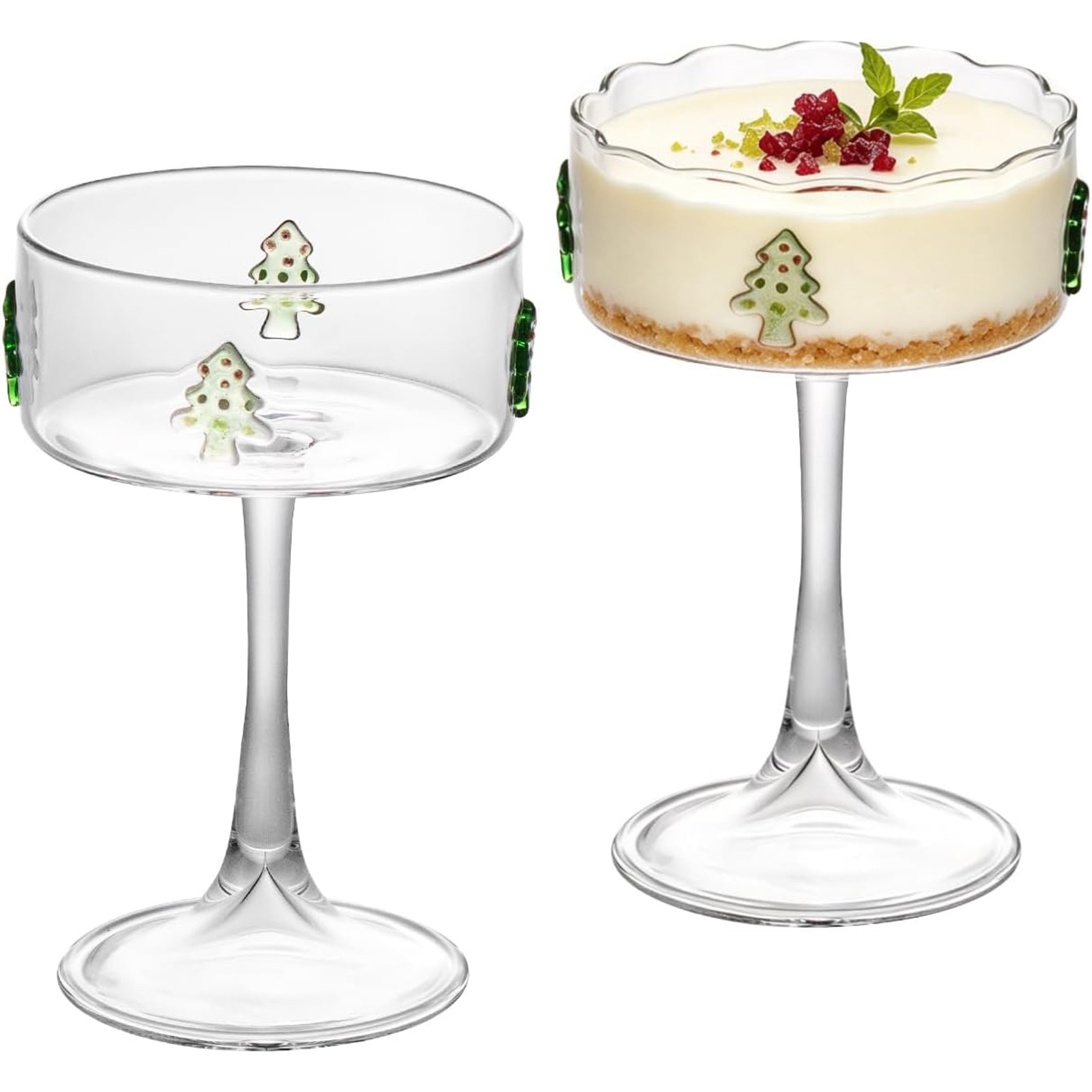
| Christmas Tree, KS0018 | 10.15 US fl oz (300 mL) | 3.94 × 6.30 in (10 × 16 cm) |
On a narrow screen, scroll within the table to see every column.
The two blue designs differ by just 0.17 US fl oz (5 mL), while their listed overall width and height match. That small capacity difference is a weak reason to choose one over the other; consider the decoration and bowl profile instead. The 300 mL cup has 50% more listed capacity than the 200 mL cup. That does not call for a 50% larger food portion.
Match the bowl to the dessert you actually make
For mousse: start with the amount you want to plate, then consider how you will finish the surface. A swirl of cream, berries or chocolate curls needs room of its own. The Gradient Cloud cup is the smallest listed option here, although its 4.25-inch overall width is the largest. A smaller capacity does not necessarily mean a narrower place setting.
For parfaits: decide whether the layers should be read from the side or enjoyed mainly from above. Colored and embossed glass becomes part of that presentation. If sharply visible layers are central to your idea, consider the clear bowl of the Christmas Tree design, while allowing for its decoration. In a tapered bowl, equal layer heights will not necessarily represent equal amounts.
For ice cream: choose a bowl around your usual scoop and toppings. A scoop is not a fixed volume, so a capacity figure cannot promise a particular scoop count. Compare the two blue footed cups for the look you prefer, then check your actual scoop and spoon in the cup before planning a full dessert service.
From the KAMMAK collection
Gradient Cloud Dessert Cups — LWS013
The smallest listed capacity in this comparison, paired with the widest overall dimension. Consider it when color and a broad bowl matter to your presentation.
- 6.76 US fl oz (200 mL) per cup
- Approx. 4.25 in wide × 3.54 in high (10.8 × 9 cm)
- Set of 2 glass cups
From the KAMMAK collection
Blue Embossed Dessert Cups — LWS002
A blue, textured option for a dessert presentation viewed from above as well as the side. Its capacity is very close to the Ocean design.
- 7.44 US fl oz (220 mL) per cup
- Approx. 4.02 in wide × 3.46 in high (10.2 × 8.8 cm)
- Set of 2 glass cups
Use a volume, spoon and space check
Before buying, note the approximate volume of a portion you already like in a familiar bowl. Use that as a starting point for your shortlist. Once you have the new cup, try this simple check before guests arrive:
- Volume: use room-temperature water and a measuring jug to see how much the cup holds at a fill level you find practical. Leave the space you want below the rim; do not assume the listed capacity describes that level.
- Spoon: empty and dry the cup, then try your serving spoon and eating spoon. Check that the spoon bowl enters comfortably and reaches the bottom without awkward scraping.
- Space: place the cup beside the actual plate, napkin and drinking glass. Rehearse setting it down and lifting the spoon, with room for your hand.
Finish by assembling one dessert in the way you intend to serve it. Water helps you understand volume; it cannot predict the height of an ice cream scoop, gaps between fruit pieces or a garnish leaning over the edge. This is a suggested home check, not a test we performed on these products.
Separate stem height from bowl depth
The Christmas Tree cup is listed at 6.30 inches (16 cm) tall, compared with approximately 3.46–3.54 inches (8.8–9 cm) for the three shorter designs. Much of its visual height comes from the stem. Overall height therefore cannot tell you the depth of the food-holding bowl or the spoon length you will need.
For table planning, use the cup’s overall width before its base diameter. The Ocean design, for example, has a listed 2.52-inch (6.4 cm) base but a 4.02-inch (10.2 cm) overall width. Arranging cups using only the base measurement would underestimate their widest part.
The tall Christmas design’s listed width is slightly smaller than the other three, but that does not establish that it is easier to carry or fits your shelf. Check the complete cup against your tray, storage shelf and seated sightline. The product specifications do not provide internal bowl depth or opening measurements.
From the KAMMAK collection
Navy Blue Ocean Dessert Cups — LWS005
Choose it for its ocean decoration and short footed profile. Its listed capacity is only 5 mL greater than the Blue Embossed design.
- 7.61 US fl oz (225 mL) per cup
- Approx. 4.02 in wide × 3.46 in high (10.2 × 8.8 cm)
- Set of 2 glass cups
From the KAMMAK collection
Christmas Tree Long-Stem Dessert Cups — KS0018
The largest listed capacity and tallest overall profile in this comparison. Consider it for a festive dessert presentation, after checking tray and shelf space.
- 10.15 US fl oz (300 mL) per cup
- Approx. 3.94 in wide × 6.30 in high (10 × 16 cm)
- Set of 2 glass cups
Count cups, then plan the table
Each featured set contains two cups. For four people receiving one dessert cup each, you need two sets; for six people, three sets. Extra cups for a second dessert course or a separate preparation batch are a hosting choice, not an automatic requirement.
If dessert follows a meal, clear unneeded plates before bringing the cups to the table. For a tea gathering with several small dishes, test the whole arrangement together. Our afternoon tea table setting for two to four offers a related planning guide. Carrying capacity and final table space are separate checks, so rehearse your serving tray too.
Choose a cup you can care for as directed
The current care instructions for all four designs call for gentle hand washing with a soft, non-abrasive sponge, drying with a soft cloth, and avoiding sudden extreme temperature changes. Follow that guidance when planning preparation and cleanup. Their dessert-serving descriptions do not establish dishwasher, microwave, oven or freezer compatibility.
Choose the design whose listed capacity, bowl shape and overall dimensions suit your dessert and setting. Keep the 220 mL and 225 mL blue cups on the same practical shortlist; consider the 200 mL Cloud cup for its lower listed capacity and the 300 mL Christmas Tree cup for its larger capacity and taller presentation. You can compare the remaining styles in the KAMMAK dessert cup collection.