Glassware Guide · Brandy & Cognac
How to Choose a Brandy Glass: Shape, Size & Cognac Guide
A practical guide to snifters, tulip glasses, capacity, rims, and stems—so you can choose a glass that supports aroma, comfortable swirling, and an unhurried pour.
- Snifter vs tulip
- Shape and size
- Cognac tasting
- Crystal glassware
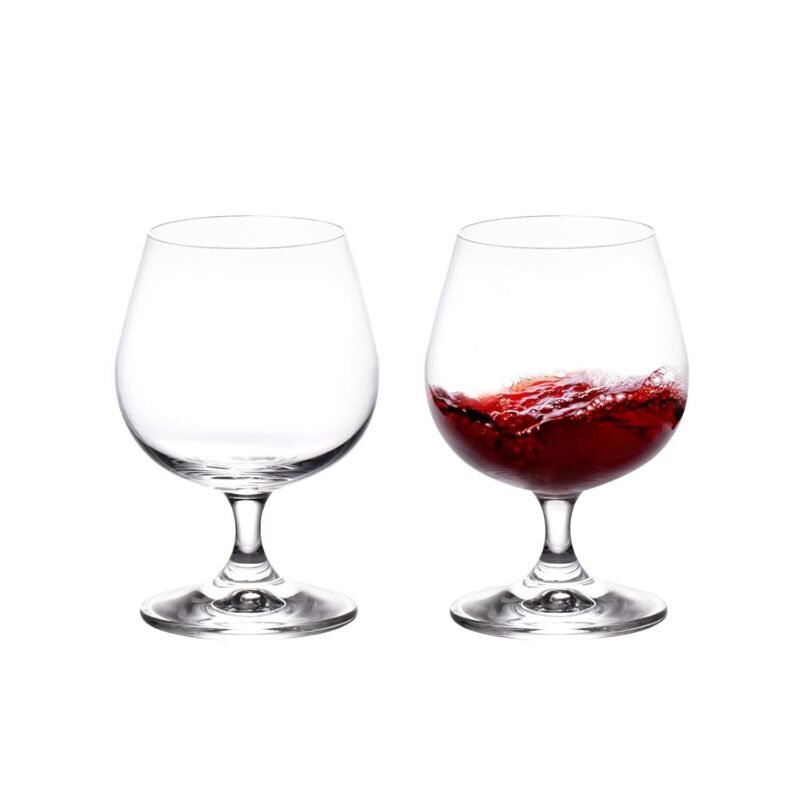
Choose a brandy glass with enough bowl space to hold a modest pour and allow gentle movement, plus an opening that narrows toward the rim. A tulip-shaped glass offers controlled aroma delivery; a classic snifter gives a broader, more traditional hand feel. Capacity is the vessel’s total volume, not a recommended serving line.
Start with function
What makes a good brandy glass?
A useful brandy glass manages three things at once: room in the bowl, a focused opening, and a comfortable way to hold the vessel. Decorative cutting and color can add character, but the silhouette determines how the glass feels during tasting.
Rounded bowl
A wider lower bowl leaves space around a small pour and makes gentle movement easier without filling close to the rim.
Tapered opening
A narrower opening helps direct the aromas rising from the bowl instead of allowing them to disperse immediately.
Stable hold
A stem, foot, or balanced base gives you a dependable grip. Choose the format that feels natural rather than relying on tradition alone.
Compare the silhouettes
Snifter vs tulip glass
Both shapes can work for brandy. The difference is mainly how broadly the bowl opens, how sharply it narrows, and how the glass sits in the hand.
| Feature | Classic snifter | Tulip-shaped glass |
|---|---|---|
| Silhouette | Broad bowl with a short stem and narrowing rim | More upright bowl with a clearly tapered top |
| Aroma experience | Generous bowl space with a broad, traditional presentation | More controlled path from bowl to nose |
| Hand feel | Often cradled around the bowl or held at the short stem | Usually held by the stem or base |
| Best fit | Relaxed after-dinner serving and classic styling | Focused neat tasting and aroma comparison |
The Bureau National Interprofessionnel du Cognac recommends a tulip-shaped glass for neat Cognac because its slightly closed shape helps gather and gradually reveal aromas. That makes the tulip a strong default when tasting is the priority.
Capacity is not the pour
What size brandy glass should you choose?
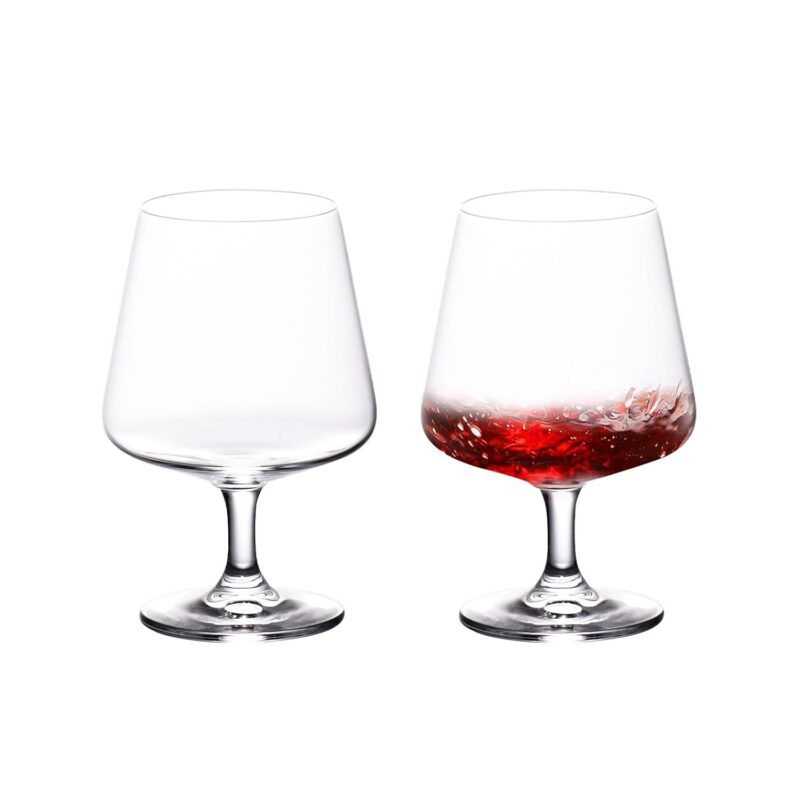
Do not choose by ounce count alone. Total capacity describes how much the vessel can hold to the brim; it does not tell you how much brandy belongs in a tasting pour.
Use this five-point checklist
- Bowl room: leave open space above the liquid for aroma and gentle movement.
- Rim: choose an opening that narrows without feeling awkward against the lips.
- Stem or base: look for a grip that feels balanced and secure.
- Serving style: neat tasting, cocktails, and ice call for different shapes.
- Storage and care: confirm height, cabinet clearance, and the product’s washing directions.
The official Cognac tasting guidance suggests a neat pour of 2–4 cl, or 20–40 mL. Using the NIST U.S. conversion, that is roughly 0.7–1.4 U.S. fluid ounces. A larger glass can still be appropriate because the empty bowl space is part of the experience.
A calm tasting sequence
How to use a Cognac or brandy glass
The glass should make the tasting easier, not turn it into a performance. A short sequence keeps the focus on appearance, aroma, and flavor.
Use a measured 20–40 mL reference for neat Cognac rather than filling the bowl.
Observe color and clarity against a neutral background with comfortable light.
Bring the glass toward the nose before vigorous swirling so alcohol does not dominate immediately.
Take a small sip and allow time between impressions instead of rushing the glass.
A current KAMMAK option
Crystal Cognac Glasses, Set of 2
This current pair uses a tulip-shaped crystal glass bowl, tapered rim, and short stem. The product page lists a 250 mL capacity per glass, a set of two, and SKU 7KPSP813N.
- Tulip-shaped bowl and tapered rim
- Short stem to reduce contact with the bowl
- Crystal glass construction
- Gift-ready pair for brandy, Cognac, whisky, or cocktails
Choose for the way you drink
Can you use a whiskey glass for brandy?
Yes, but it creates a different experience. A low tumbler emphasizes weight, stability, and room for ice. A tulip or snifter emphasizes the relationship between bowl space and a narrower opening.
If you usually serve brandy in cocktails or over ice, a tumbler may be practical. If you compare aromas neat, start with a tulip-shaped glass. For more context, see KAMMAK’s guide to essential whiskey glass shapes and the comparison of wine and whiskey glasses.
Common questions
Brandy glass FAQ
Use product specifications and your preferred serving style to make the final choice.
Is a Cognac glass the same as a brandy glass?
The terms overlap. Cognac is a type of brandy, and both are commonly served in tulip-shaped or snifter-style glasses. For neat Cognac tasting, the official Cognac body specifically recommends a tulip or stem glass.
What is the best shape for a brandy glass?
A rounded bowl with an opening that narrows toward the rim is a useful starting point. Choose a tulip for more focused nosing or a classic snifter for a broader, traditional feel.
How full should a brandy glass be?
Do not use total glass capacity as a fill line. For neat Cognac, official guidance suggests 2–4 cl, leaving most of the bowl open.
Should you hold a brandy glass by the bowl?
You can cradle a classic snifter, but a stem or base reduces hand contact and gives you more control over warming. Choose the hold that feels stable and suits the tasting style.
Are crystal brandy glasses dishwasher safe?
Care varies by product. Check the current manufacturer instructions for the exact glass, especially when it has a delicate rim, decorative finish, or hand-applied detail.
Sources and editorial notes
- Bureau National Interprofessionnel du Cognac: How to Taste Cognac — supports the tulip/stem glass and aroma guidance.
- Bureau National Interprofessionnel du Cognac: Tasting Cognac — supports the 2–4 cl neat-pour reference and gentle nosing sequence.
- NIST approximate U.S.–metric conversions — supports the milliliter and U.S. fluid-ounce conversion.
Product dimensions, materials, availability, and care can change. Confirm the current KAMMAK product page before purchase. This guide describes selection principles and does not prescribe alcohol consumption.
Choose a glass that gives the pour room to speak
Start with shape, confirm the current product specifications, and choose the pair that feels comfortable in your hand and considered on your table.
Explore the KAMMAK Cognac glass set