
Practical flower styling guide
The right vase size supports the stems, keeps the arrangement visually balanced, and fits the place where it will be displayed. Start by measuring the vase from its base to its rim. As a flexible rule of thumb, aim for a finished arrangement about 1.5 to 2 times the vase height, measured from the vase base to the highest flower. Then check the opening, base stability, and available space before trimming.
Start with proportion
Measure first. Trim second.
A clear base-to-rim measurement gives you a useful starting point without pretending every flower, opening, or room behaves the same way.
What does “vase size” actually measure?
Search results often give different vase-to-flower ratios because they do not define what is being measured. Use four measurements to compare vases clearly.
Vase height
The vertical distance from the bottom of the vase to the rim.
Finished height
The distance from the vase bottom to the highest bloom or branch.
Visible flower height
The distance from the rim to the highest bloom.
Stem length
From the cut end to the flower; part of this length sits inside the vase.
The opening is a separate measurement: the inside width or diameter at the mouth. An oval opening may need two dimensions. A product’s listed length and width usually describe its exterior dimensions, so do not treat them as the opening size unless the listing says so explicitly.
Also check the footprint and base. A tall arrangement creates leverage above the rim, which makes stability just as important as height—especially with heavy blooms or branches.
A practical vase-to-flower height ratio
Mississippi State University Extension gives a floral-design rule of thumb: make the finished design about 1.5 to 2 times the height of the container. Use that as a starting point for proportion, not as a fixed formula.
Measure the finished result from the bottom of the vase to the highest flower, not only the flowers visible above the rim.
| Vase height | Starting finished height | Approximate height visible above rim |
|---|---|---|
| 6 in | 9–12 in | 3–6 in |
| 8 in | 12–16 in | 4–8 in |
| 10 in | 15–20 in | 5–10 in |
| 14 in | 21–28 in | 7–14 in |
How to read the table: These are total arrangement heights from the vase base to the highest flower. They do not prescribe an exact stem length because stems extend to different depths inside different vase shapes.
Adjust the range after looking at the materials. Compact, rounded flowers can feel balanced near the lower end. Airy stems or branches may extend higher without looking top-heavy. If the bouquet leans, spreads too far, or makes the vase unstable, shorten it or choose a more supportive opening and base.
How to choose a vase size for flowers
Decide whether it needs water
Fresh flowers need a container identified as suitable for water or fresh-flower use. Do not infer watertightness from material or appearance alone.
Measure before cutting
Measure base to rim, estimate a total height with the 1.5–2× range, and compare it with the stems while they are still uncut.
Match the opening
A narrow mouth gathers a few stems; a medium mouth lets a mixed bouquet spread; a wide opening may need a fuller, lower bundle.
Check the base
Test whether the empty vase rocks, add stems gradually, and redistribute visual weight if the arrangement pulls toward one side.
Fit the room
Measure total height and spread. Keep a dining arrangement low or visually open enough for conversation across the table.
There is no universal stem-count chart because roses, tulips, hydrangeas, branches, and foliage have different thicknesses. Loosely gather the actual stems and compare the bundle with the inside opening. They should enter without crushing, but the mouth should not be so wide that the arrangement immediately falls to the sides.
Which vase shape works for which arrangement?
Bud or narrow neck
Useful for one stem or a small upright group. Check stem thickness and neck support.
Straight cylinder
Supports clean vertical lines. Compare the actual mouth width and base stability.
Hourglass or waisted
Creates a gathered center with blooms spreading above the rim. Check its narrowest internal point.
Low and wide
Suits a compact centerpiece or short, full design. A small bundle may need more support.
Tall statement shape
Can carry long stems, branches, or a vertical accent. Check base weight and overhead clearance.
Room comes last
A console can carry more height than a dining table, while a shelf needs clearance above the flowers.
Shape names are shortcuts, not guarantees. Two vases of the same height can behave very differently if one has a narrow neck and the other has a wide mouth. Compare the actual dimensions and silhouette.
If the size is settled but the visual direction is not, see KAMMAK’s guide to modern vase styles for color, finish, and placement ideas.
Four current KAMMAK vase size examples
The measurements below come from the current product pages reviewed for this guide. They are overall product dimensions, not opening measurements, and are presented as real size references rather than promises that a particular bouquet will fit.
| KAMMAK vase | Material | Overall dimensions (L × W × H) | Useful size reference |
|---|---|---|---|
| Amber Aqua Oval — SYX023 | Glass | 6.3 × 1.9 × 8.1 in | Mid-height, slim oval profile |
| Smoky Clear — SYX028 | Glass | 4.9 × 3.6 × 8.8 in | Compact mid-height reference |
| Emerald Green Tall — SYX026 | Glass | 6.5 × 6.6 × 13.6 in | Taller, broader example |
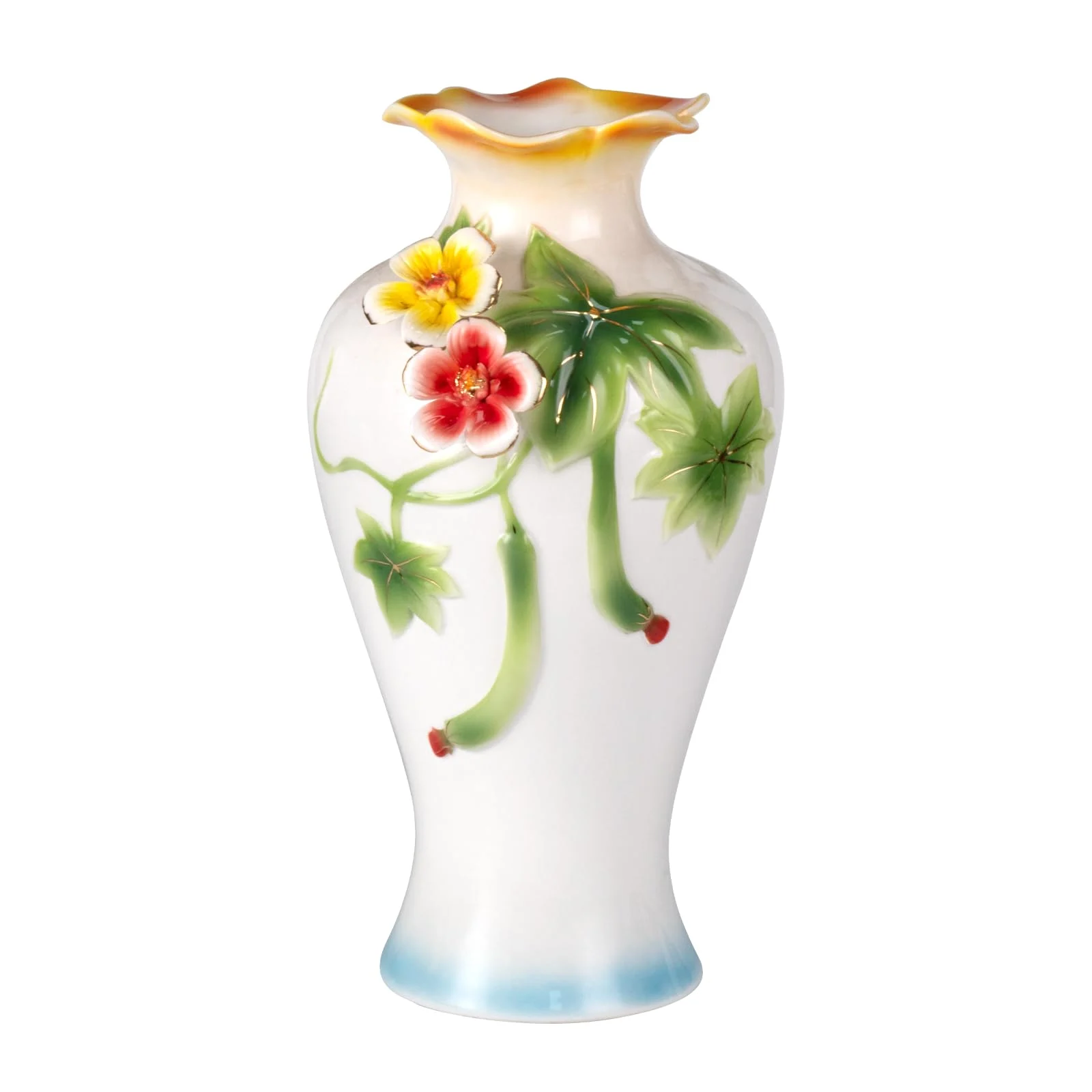
| Hand-Painted Floral Ceramic — YZ001 | Ceramic | 5.2 × 5 × 14.2 in | Tall example; page states a water-resistant interior and fresh-flower use |
See the complete silhouettes
All four product photographs are displayed uncropped. Use the stated dimensions—not apparent photo scale—for comparison.
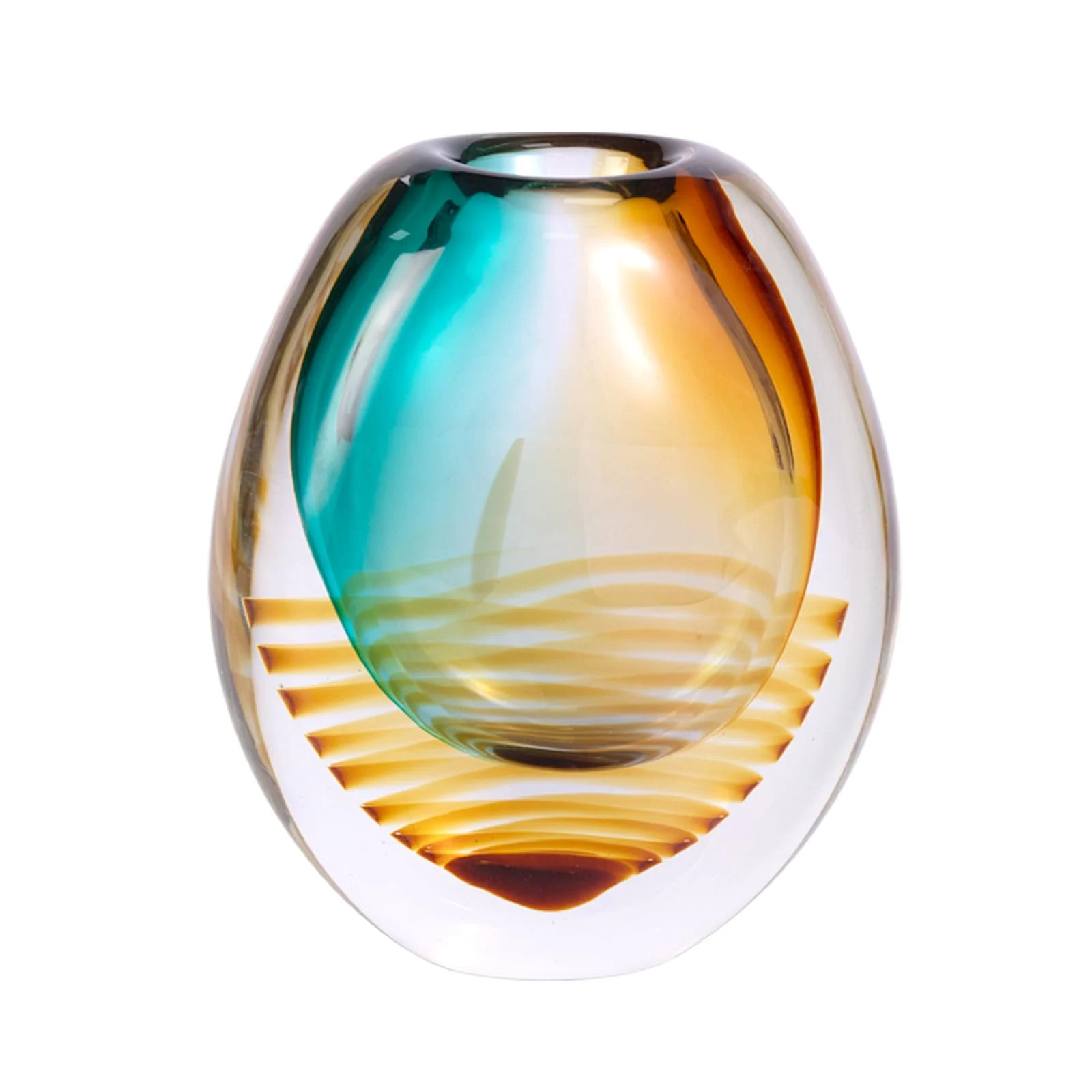 8.1 in high
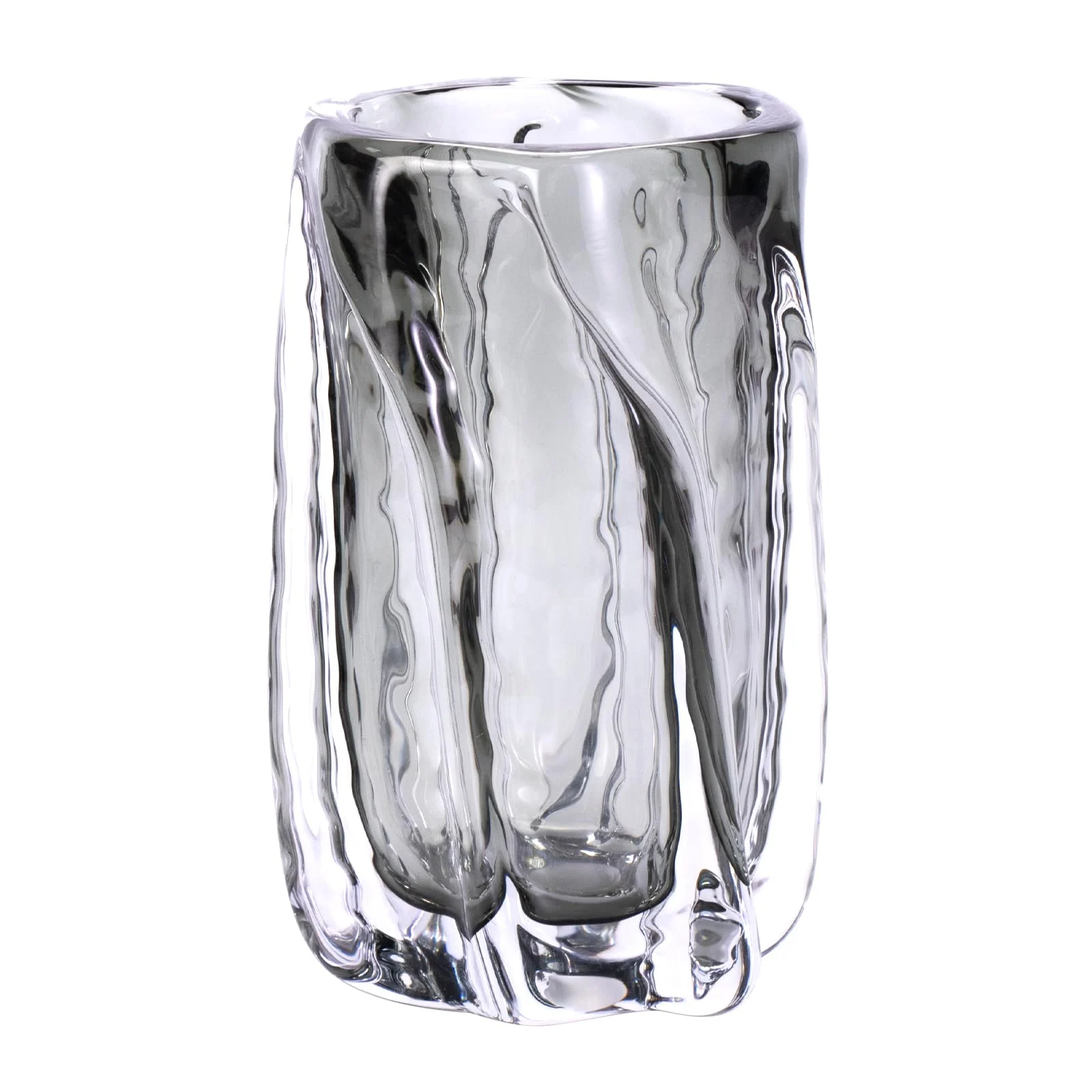 8.8 in high
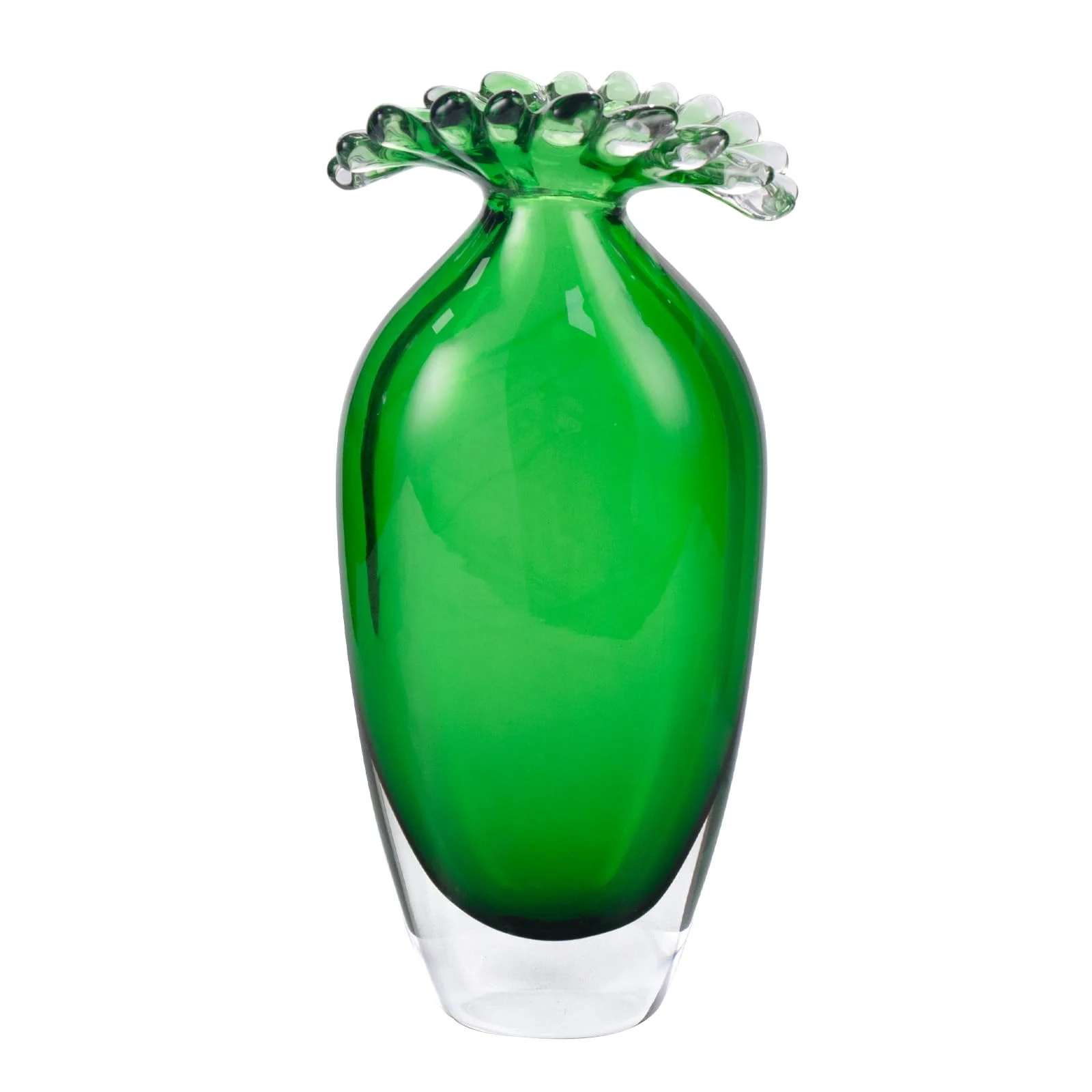 13.6 in high14.2 in high
Photography note: The products are not shown at one common scale. Every image uses object-fit: contain so the top, base, and full outline remain visible.
For a broader comparison, browse current KAMMAK Glass Vases, Ceramic Vases, and Retro Ceramic Vases. Recheck live specifications and availability before ordering.
Glass vs. ceramic vases
Material changes the visual experience, but it does not replace a size check.
Glass
Transparent or translucent glass can reveal stem lines and make the water level easier to see. It also makes cloudy water, fallen leaves, and crossed stems more visible.
Ceramic
An opaque ceramic vase hides the water and lower stems, allowing its color, glaze, and surface decoration to carry more of the display.
Neither material automatically proves that a particular vase is safe for fresh flowers. Read the exact product page for water-use guidance. Among the four examples above, only YZ001 has an explicit water-resistant-interior and fresh-flower statement in the reviewed copy.
For more context on glass form and production, read the KAMMAK overview of hand-blown glass vases.
Common vase-sizing mistakes
Photography does not provide dependable scale. Use the stated dimensions.
Exterior width and the inside opening are different measurements.
Establish the tallest line, then trim in stages so you can adjust.
A tall arrangement can still tip if the footprint is too light or narrow.
Crowded stems can be damaged and become difficult to arrange.
A small bundle may fall apart visually; choose a narrower vessel or rethink the grouping.
Confirm fresh-flower suitability on the exact product listing.
Fresh-flower care after the proportions work
Start with a clean vase, remove leaves below the waterline, use cut-flower food as directed, and keep the arrangement away from heat. The Royal Horticultural Society recommends checking the water level and changing the water while recutting stems every two to four days. Mississippi State Extension notes that submerged foliage encourages bacterial growth that can interfere with water uptake.
Vase size FAQ
What size vase should I use for flowers?
Measure base to rim and begin with a finished arrangement about 1.5–2 times that height. Then adjust for flower shape, stem weight, mouth width, stability, and placement.
How tall should flowers be above a vase?
Using the same starting range, visible flowers may extend roughly half to one full vase height above the rim. For a 10-inch vase, that is about 5–10 inches.
Is a vase one-third or one-half of the arrangement height?
The language varies because “arrangement” is often measured differently. With a clear base-to-top measurement, a design 1.5–2 times the container height makes the vase about one-half to two-thirds of the total.
What opening size do I need for a bouquet?
There is no reliable answer without the stem count and thickness. Loosely gather the actual stems and choose an inside opening that supports without squeezing them.
Can I use a tall vase for short flowers?
Only if enough usable stem length remains inside and the blooms still sit above the rim. A shorter vase is often easier after stems have already been cut.
Are product length and width the vase opening?
No. They normally describe the overall exterior size unless the page explicitly identifies a mouth or opening measurement.
Are all ceramic and glass vases watertight?
Do not assume so. Material and appearance are not proof; check whether the exact item is intended for water and fresh flowers.
Choose, then trim
Compare the height, opening, base, and room
Use the 1.5–2× proportion as a first draft, then let the actual stems, vase silhouette, and display area determine the final arrangement.
Browse current vases →Arranging roses? Use our rose vase selection guide to check the opening and stem fit before cutting.