
Tea & Table Guide
Tea cups are sold in many capacities. In the verified KAMMAK examples below, listed sizes range from 0.85 to 6 oz. As a practical shopping guide, cups under 2 oz work well for very small, repeated pours; 2–4 oz cups suit compact tea service; 4–6 oz cups allow a fuller serving; and larger vessels move toward mug-style drinking.
The right size is the one that fits how you pour, how often you want to refill, and whether you prefer a petite cup or a longer drink. If you are comparing products in ounces and milliliters, one U.S. fluid ounce equals approximately 29.57 milliliters, according to the National Institute of Standards and Technology.
Size at a glance
From petite pours to longer servings
Treat capacity as a choice, not a rule. Start with your serving style, then compare the listed ounce or milliliter capacity.
How many ounces are in a tea cup?
Across the verified KAMMAK examples in this guide, capacity spans 0.85 to 6 fluid ounces. That sample alone shows why a single “standard” answer is not useful for every product or serving routine.
It also helps to separate two ideas that share the word “cup.” A U.S. customary cup is a unit of volume equal to 8 fluid ounces, or approximately 240 milliliters. A tea cup is a drinking vessel, and its actual capacity depends on its shape and intended use. A teacup does not automatically hold one measuring cup.
These practical bands make product listings easier to compare:
| Listed tea cup capacity | Approximate metric volume | A practical fit for |
|---|---|---|
| Under 2 fl oz | Under 59 mL | Very small pours and frequent refills |
| 2 to under 4 fl oz | 59 to under 118 mL | Compact individual tea service |
| 4 to under 6 fl oz | 118 to under 177 mL | A fuller cup without moving into mug territory |
| 6 to under 8 fl oz | 177 to under 237 mL | Longer tea sessions and room for additions |
| 8 fl oz and above | 237 mL and above | Mug-style drinking and fewer refills |
These are shopping bands, not formal standards. Always use the capacity shown on the product page when you need an exact answer.
Why tea cup size changes the way you serve tea
Pour size and refills
A petite cup creates shorter servings and more opportunities to refresh the pour. A 5 or 6 oz cup keeps more tea in front of one person and reduces the number of refills. Neither is inherently better; they support different habits.
Teapot pairing
Think about how many servings you want from the pot. A small pot and a very large cup may produce only one serving, while a larger pot and several compact cups can support a shared table. Divide the pot’s usable capacity by the serving size you prefer to estimate the number of pours.
Milk, lemon, and serving room
If you add milk, lemon, or other ingredients, choose a cup with enough spare capacity to stir comfortably. Treat the listed capacity as a comparison point, then leave practical serving room below the rim.
Shape as well as ounces
Two cups can list the same capacity and still feel different in the hand. One may be wide and shallow; another may be tall, footed, or paired with a saucer. Capacity narrows the choice, while shape and design determine the experience.
Four real tea cup sizes from the KAMMAK collection
The easiest way to understand tea cup size is to compare real vessels. These KAMMAK examples move from a petite 0.85 oz cup to a 6 oz cup-and-saucer set.
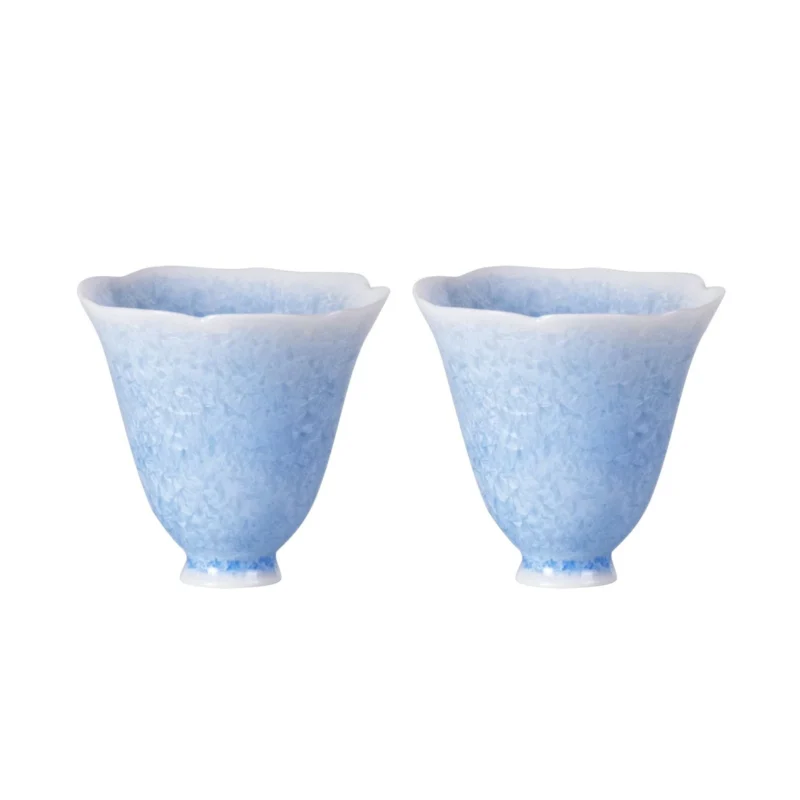 0.85 oz
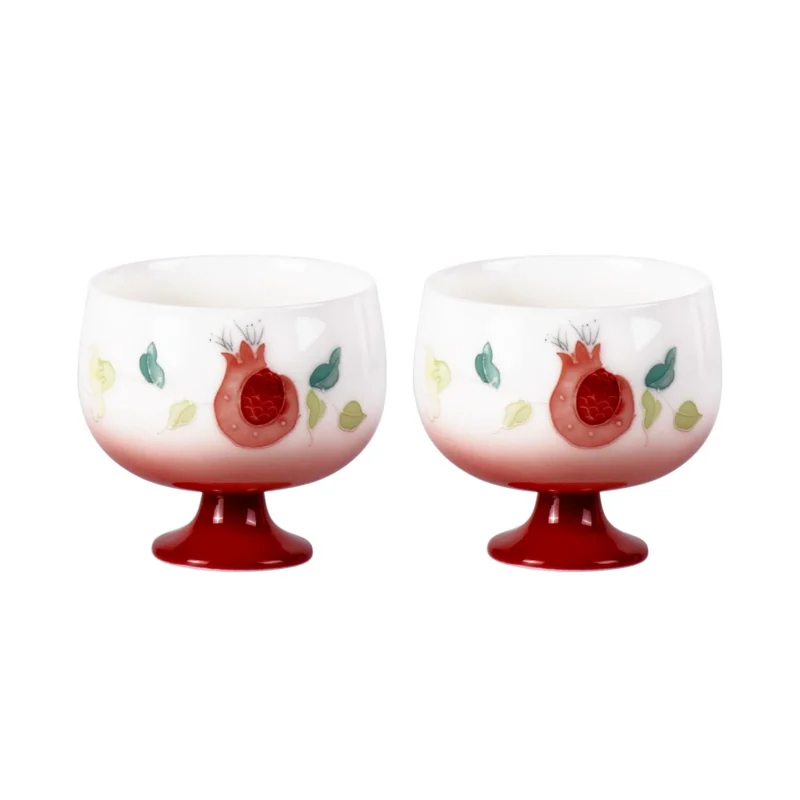 2.84 oz / 84 mL
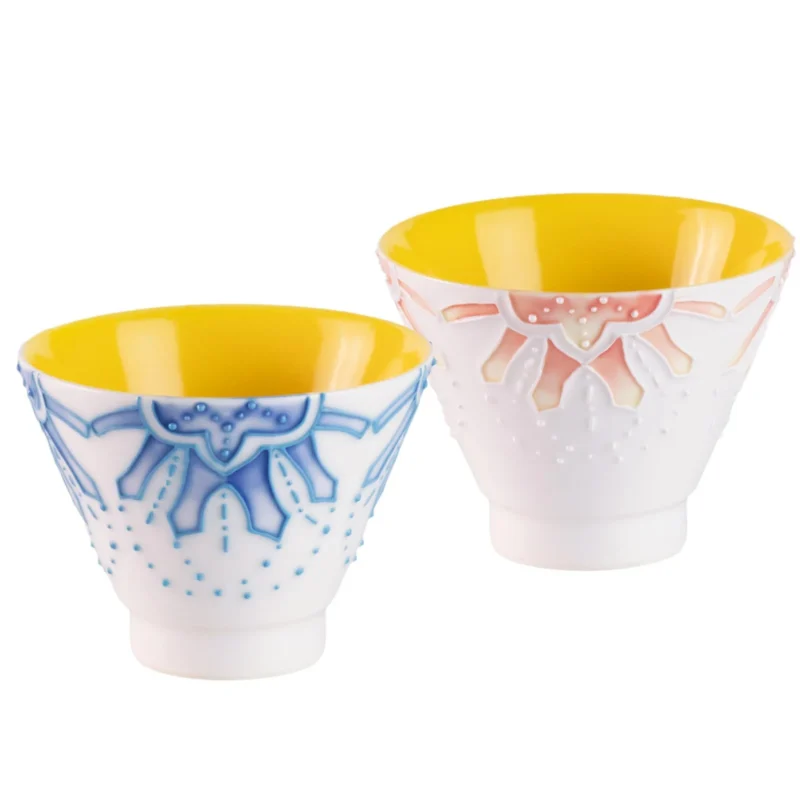 5 oz
5 oz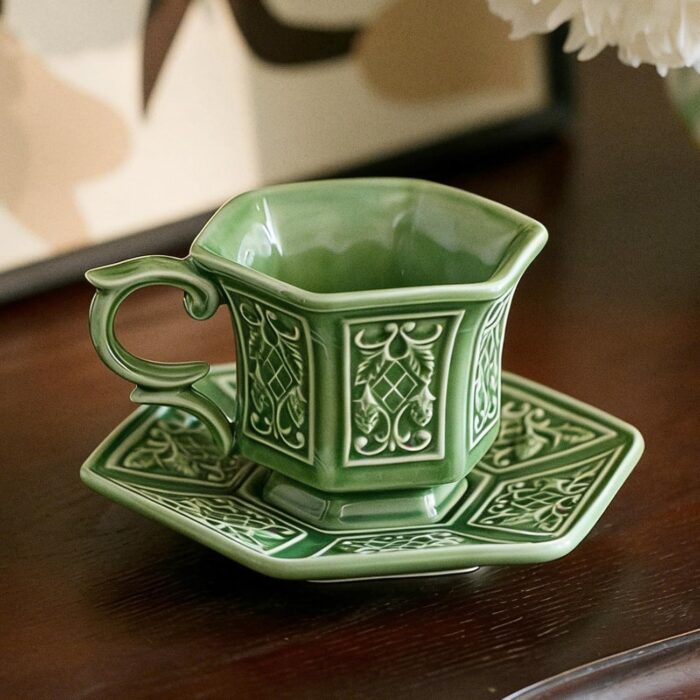 6 oz
6 ozNote: Product photography is not shown to a common scale. Compare the listed capacities, not the apparent cup size in each image.
| KAMMAK tea cup | Listed capacity | Design | Consider it if you prefer |
|---|---|---|---|
| Blue crystalline-glaze petal-rim tea cups | 0.85 oz | Petite porcelain cup with a flared rim and footed base | Very small pours and frequent refilling |
| Pomegranate footed porcelain tea cups | 2.84 oz / 84 mL | Compact footed porcelain form | A small individual serving with decorative presence |
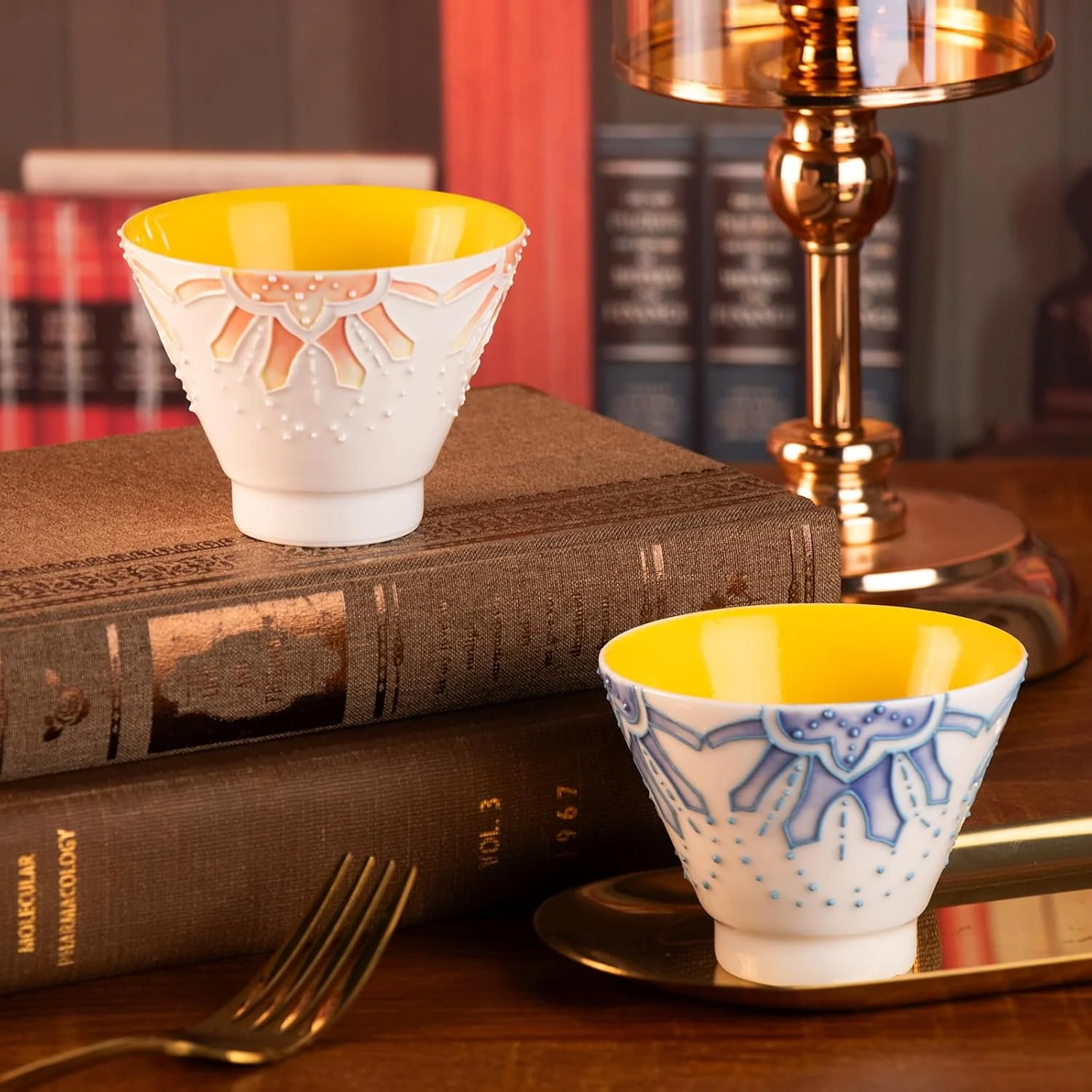
| Hand-painted orange and blue ceramic tea cups | 5 oz | Rounded ceramic pair with colorful interiors | A fuller everyday cup without choosing a mug |
| Porcelain cups and saucers | 6 oz | Handled cup-and-saucer set | A longer seated serving and classic table setting |
Under 1 oz: a deliberately petite pour
The 0.85 oz blue petal-rim tea cups are intentionally small. Choose this scale when the pleasure is in a sequence of modest pours rather than one large serving.
Around 3 oz: compact, but more relaxed
At 2.84 oz / 84 mL (rounded to 2.8 oz in the product title), the pomegranate footed porcelain tea cups offer more room while keeping the service compact.
5–6 oz: a fuller personal serving
Compare the 5 oz hand-painted ceramic tea cups with the handled 6 oz porcelain cups and saucers for a longer individual drink.
How to choose the right tea cup size
Choose your preferred pour
If you like small, refreshed pours, look below 3 oz. If you want to settle in with one cup, begin around 5–8 oz. Move higher when you specifically want a mug-like serving.
Decide how often you want to refill
Frequent refilling can feel shared and attentive. Fewer refills may be more convenient at a desk or during a long conversation.
Match the cup to the table
A footed cup can act as a decorative accent. A cup and saucer creates a coordinated place setting. Compare form, not just volume.
Read capacity and dimensions together
Ounces or milliliters tell you the volume. Height, diameter, handle, and silhouette tell you how the cup will store, sit, and feel.
If you are ready to compare styles, explore KAMMAK’s ceramic tea cups and cup sets, from petite footed pairs to fuller cups and saucers.
How to measure a tea cup at home
If an older or unmarked cup has no listed capacity, you can measure it with a liquid measuring jug.
Tea cup vs. mug: is size the only difference?
No hard capacity line separates every tea cup from every mug. In everyday use, a mug is often larger and designed for a longer, casual drink, while a tea cup may be smaller, more decorative, or paired with a saucer. There are many exceptions.
That is why listed capacity is more reliable than the product name alone. If two pieces are both described as cups, an ounce or milliliter measurement lets you compare them directly.
Material is a separate decision from size. If you are comparing different ceramic bodies, including standard porcelain and fine bone china, read KAMMAK’s guide to whether bone china is worth the splurge.
Tea cup size FAQ
Is 6 oz a standard tea cup size?
A 6 oz cup is a practical size for a fuller serving. Within the verified KAMMAK examples alone, listed capacities range from 0.85 to 6 oz, so 6 oz is one useful option rather than an all-product rule.
How many milliliters are in a 6 oz tea cup?
Six U.S. fluid ounces are approximately 177 milliliters. The conversion is based on 1 U.S. fluid ounce equaling about 29.57 milliliters.
Is a 2 oz tea cup too small?
Not if you enjoy small pours and regular refills. A 2 oz cup is compact by design. It may feel too small only when you want one longer drink with fewer trips to the teapot.
What size tea cup is best for a tea party?
Choose according to the pace of service. A 4–6 oz cup reduces refills, while a 2–4 oz cup encourages smaller servings and lets guests try more than one pour.
Should the tea cup match the teapot size?
They do not need to match exactly, but the ratio affects how many servings the pot provides. Divide the pot’s usable volume by the amount you plan to pour into each cup, leaving room below both rims.
Find your serving style
Choose the cup that fits your ritual
The best tea cup size is the capacity that supports your preferred pour, refill rhythm, and table setting. Start with volume, then choose the material, silhouette, and color that make the ritual feel like your own.
Explore KAMMAK coffee and tea service