
Holiday hosting / Color & proportion
Three Christmas table ideas built around the plates you already own, a deliberate glass color, and enough room to enjoy the meal.
Start with a palette you can repeat
Look at your dinner plates first. If they have a strong border or pattern, choose a glass color that already appears there. With plain white plates, the stems can carry the color while the cloth and serving dishes stay simple. You do not need to replace an entire dinner service to make a Christmas table feel intentional.
Use a small repeat: a napkin, place card or centerpiece detail can echo the glass. Avoid adding a new strong color for every object. This is a styling approach, not a rule about which colors belong at Christmas; a restrained pink or blue table can be just as deliberate as red and green.
Before buying, arrange a place setting with the plates and glasses you already own in the room where you will eat. Use it to decide which color you want to add. Once you have the new glass, compare it with your plates under that room’s lighting; screen colors and white-background product photos cannot show the exact effect beside your own tableware.
Proposed table palette
Proposed table palette
Proposed table palette
Product photos show the actual glass options. Color swatches illustrate a proposed palette; they are not color-calibrated samples or a photographed place setting.
Three color combinations to build around
These selections are from the KAMMAK collection.
| Look | Glass & napkin | Supporting details |
|---|---|---|
| Red & green | Red-stem flute; green napkin | White plate, quiet tablecloth, one small greenery arrangement |
| Blue & white | Blue-stem flute; white napkin | White dishes, clear water glass, a small white floral accent |
| Pink & clear | Pink-stem flute; white or pale neutral napkin | Clear water glass, plain plate, a restrained pink place card |
On a narrow screen, scroll within the table to see every column.
Red and green: let the stem provide the red
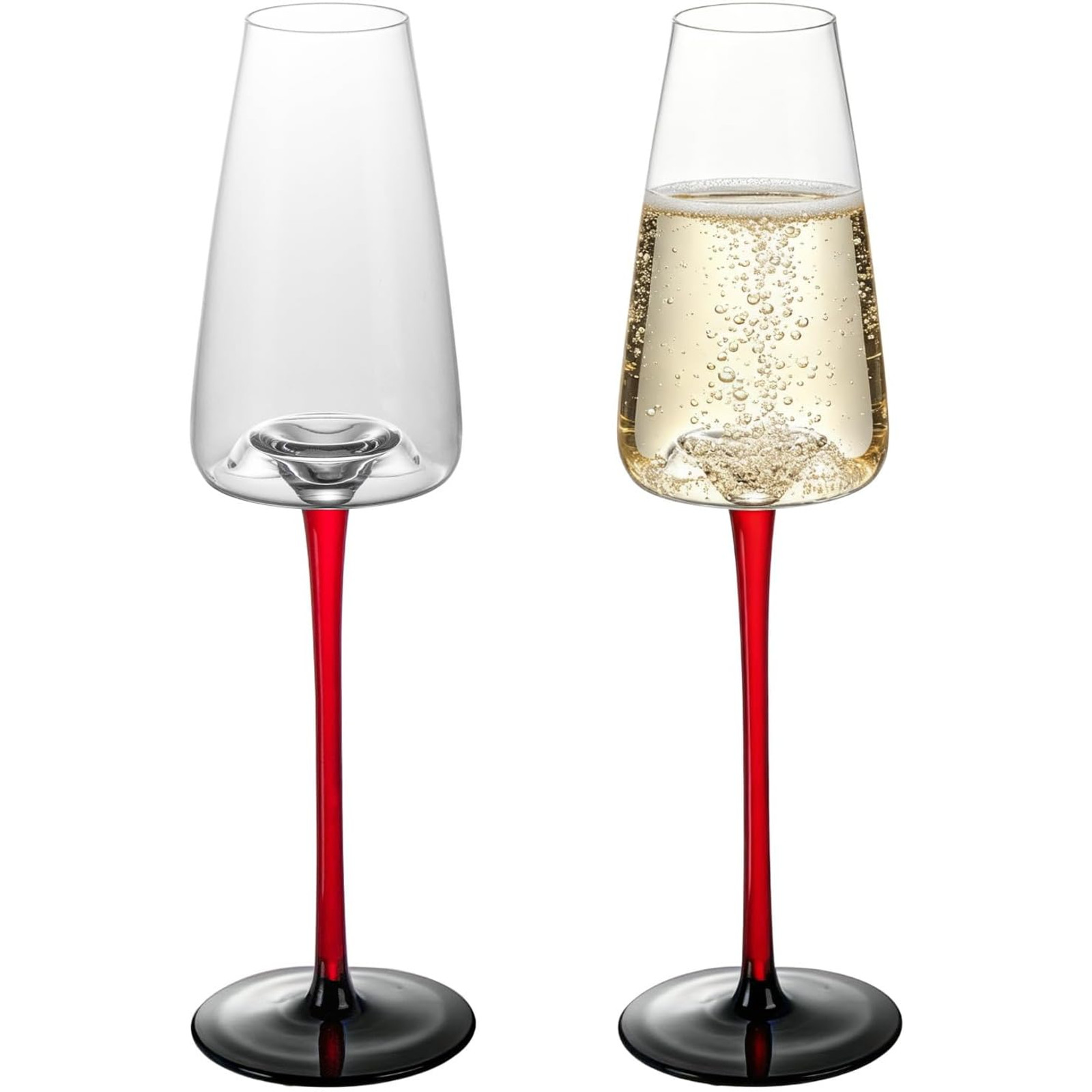
A red-stem flute gives a narrow vertical line of color. Pair it with a green napkin and leave the plate plain, so the table does not need a red charger, red runner and red centerpiece as well. If your plates already have a red pattern, simplify the napkin to white.
Blue and white: keep the contrast clean
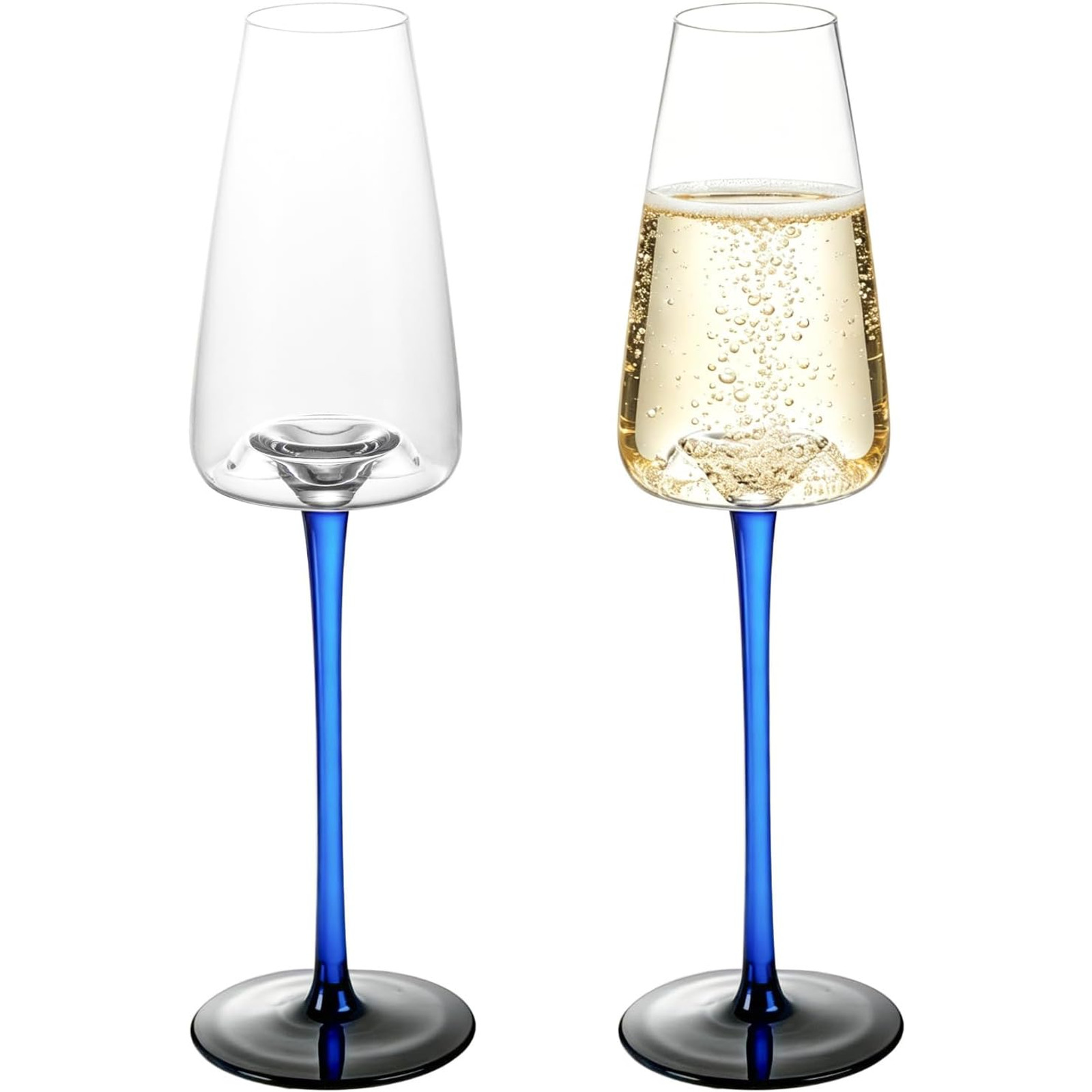
Use the blue option beside white dishes and linens. Keep the water glass clear to avoid competing blue tones. This direction is useful when your existing china is blue and white or you prefer a table that can continue into winter after the holiday decorations come down.
Pink and clear: make one soft accent visible
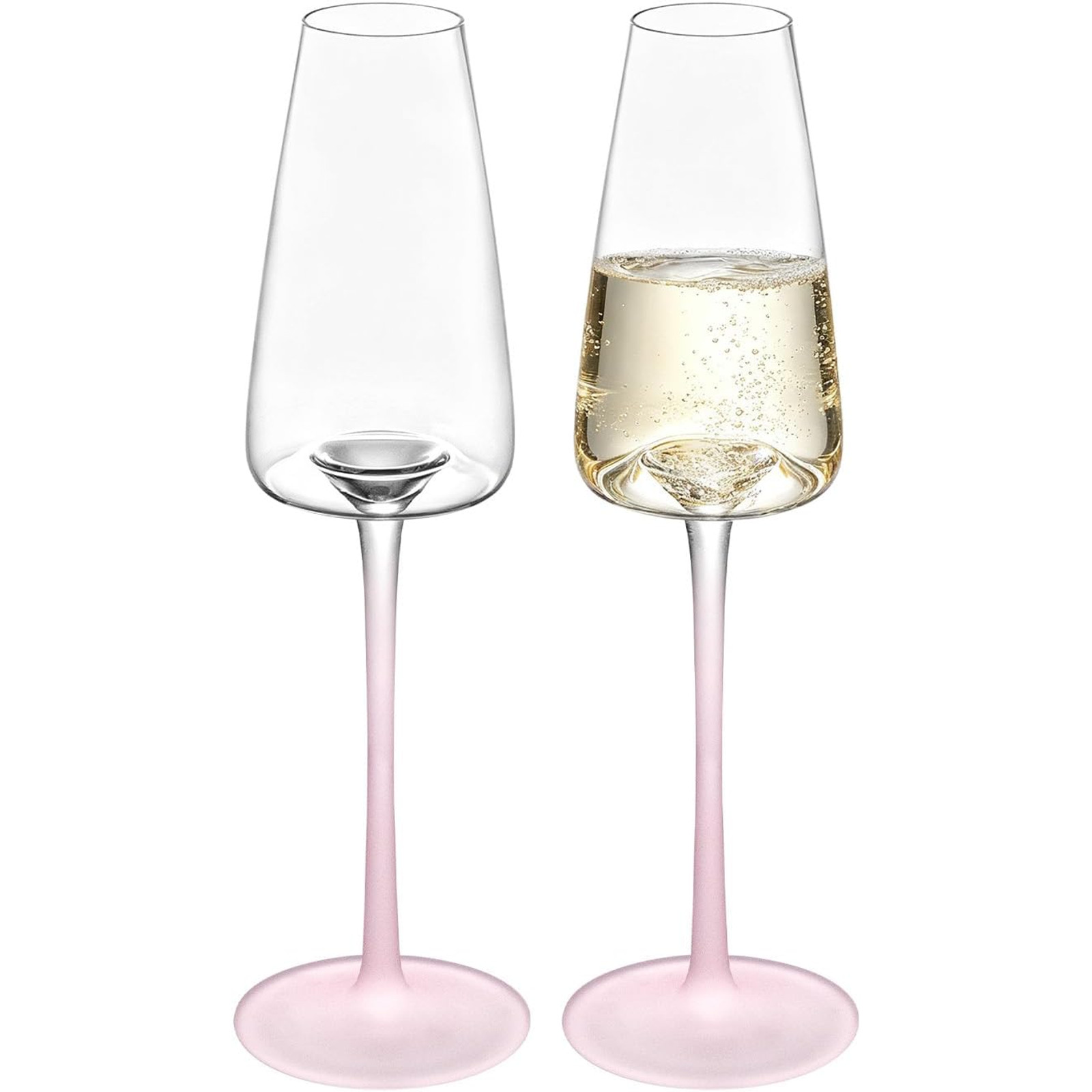
Choose the pink option and repeat the pink in a small paper place card or floral detail. Keep other drinking vessels clear. If a patterned plate is already the focal point, use a plain napkin rather than adding another floral print.
The collection contains five color options, and each selected set contains two flutes in the same color. For four matching red flutes beside green napkins, choose two red sets. If you prefer to alternate red and green glasses instead, choose one set of each color. The collection is not supplied as one mixed-color four-piece set.
From the KAMMAK collection
KAMMAK Colored-Stem Champagne Flutes, Set of 2
One glass design with a choice of stem colors lets you keep the form consistent while choosing the palette for your table.
- Set of 2 in the selected color
- Red, pink, blue, green and purple options
- Hand wash only
A four-person checklist that leaves room to serve
Build the list around what you will actually serve. For dinner with water and a separate sparkling toast, the example below uses four water glasses plus four flutes. If the toast happens before dinner at a side table, those flutes do not all need to occupy the dining table during the meal.
| Item | Quantity | When to set it out |
|---|---|---|
| Dinner plates | 4 | At each place setting |
| Water glasses | 4 | For the meal |
| Colored-stem flutes | 4, from two sets of 2 | For the toast; keep off the table until needed if space is tight |
| Dinner napkins | 4, plus replacements nearby | One per guest |
| Small centerpiece | 1 | Only if it leaves clear sightlines and serving space |
| Dessert cups | 4, if serving individual desserts | After the dinner plates are cleared |
On a narrow screen, scroll within the table to see every column.
The green pocket napkins are listed at 8.5 × 4 inches folded and 16.5 × 16.5 inches unfolded. Those are different measurements: use the folded footprint when planning the place setting and the unfolded size when judging coverage in use. Our dinner napkin size guide explains that distinction.

From the KAMMAK collection
KAMMAK Green Pocket Dinner Napkins, 100 Pack
The folded green napkin supplies the second color in a red-and-green place setting; its listed footprint helps with the dry layout.
- 8.5 × 4 in folded
- 16.5 × 16.5 in unfolded
- 100 napkins per pack
Check the footprint before adding the centerpiece
Use one plate, the actual flatware and all the glasses for one guest to make a dry layout on the table. Measure the complete setting’s width and depth, including room to pick up a glass and move a knife. Then repeat the setting at every seat. A product’s outside diameter alone does not account for the space a hand needs around it.
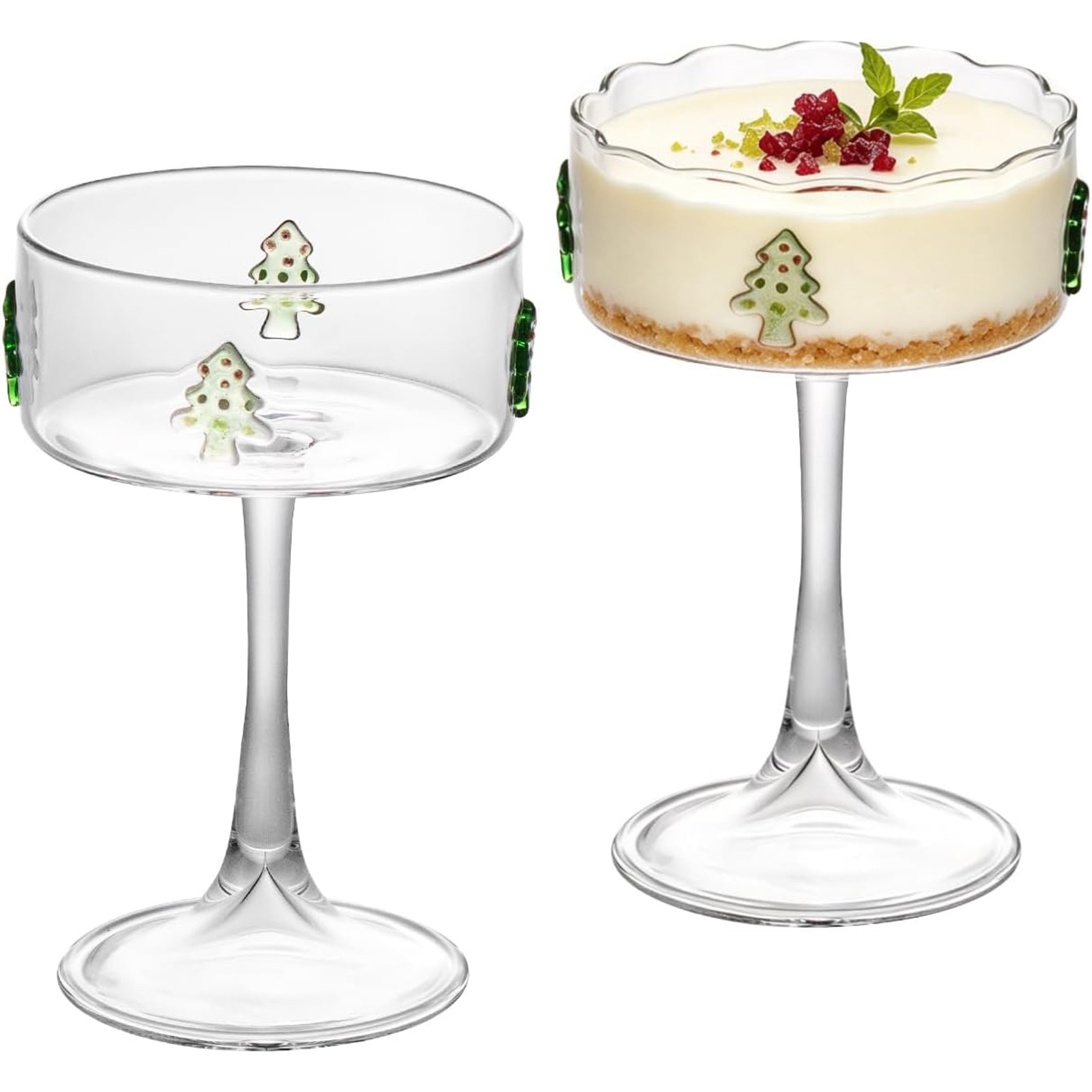
The red flute listing gives a base diameter of about 2.95 inches and a height of 10.24 inches. The Christmas-tree dessert cup is about 3.94 inches wide and 6.30 inches high. These dimensions help compare footprints and heights; they do not prove that both pieces will fit comfortably beside your plates.
- Place the largest serving dish you intend to keep on the table in its working position.
- Seat someone at each side and check that glasses can be lifted without brushing nearby objects.
- Add the centerpiece last. View it from a seated position, not just from above.
- Move decorative extras to a console if they occupy the space needed to pass or serve food.
For a conventional place setting, drinking glasses sit above and to the right of the plate. Emily Post’s informal table guide describes that arrangement. Keep the glasses you expect guests to use easiest to reach, and avoid crowding them with ornaments. For a more detailed small-table plan, see our small holiday table setting guide.
Bring the Christmas detail in with dessert
Changing one piece for the next course can give the table a fresh focal point without making dinner feel crowded. Clear the used plates, keep the glasses that are still needed, and bring out individual desserts in the Christmas-tree cups.
The KS0018 dessert cups are listed at 10.15 US fl oz (300 mL) each, in a set of two. That is the stated vessel capacity, not a recommended portion or a promise that every layered recipe fits. Leave space for toppings and the spoon, and try your intended portion in one cup before preparing all four.
Use the tree motif as the seasonal detail in a blue-and-white or pink-and-clear scheme. It does not need another busy layer beneath it. A plain dessert spoon and the existing napkin are enough to keep the setting connected to dinner.
From the KAMMAK collection
KAMMAK Christmas-Tree Dessert Cups, Set of 2 — KS0018
Bring these out for a separate dessert course to add a seasonal motif without filling the dinner setting with extra vessels.
- 10.15 US fl oz (300 mL) per cup
- Approximately 3.94 in wide × 6.30 in high
- Set of 2
Finish the plan with a quick rehearsal
Photograph one complete place setting for your own reference, then remove anything that makes reaching, serving or conversation awkward. Keep spare napkins and the next course’s cups within reach on a tray. A useful Christmas table works during the meal as well as before the guests arrive.
Check the care instructions for each piece. The colored-stem flute listing specifies hand washing. The Christmas-tree dessert cups call for gentle hand washing with a soft, non-abrasive sponge, soft-cloth drying and avoidance of sudden extreme temperature changes. Those instructions apply to these products; decorative glassware should not be assumed to share another collection’s dishwasher or heat tolerance.
Choose the glass shape for the drink as well as the color. Our flute, coupe and tulip comparison can help with that decision. Once the shape and quantity are settled, browse the champagne glass collection and use your existing plates and linens to complete the setting.