
Coffee & Table Guide
A “standard” coffee mug is not one fixed, regulated size. For everyday shopping in the U.S., 8–12 U.S. fluid ounces (about 237–355 mL) is a useful range, and 12 oz is a common practical reference. Check the capacity on the product page, then leave room below the rim for carrying, milk, or foam.
Current consumer guides do not all use the same categories, so treat the word standard as a shopping shortcut rather than an exact rule. The best size depends on the finished drink you make, how often you want a refill, and where the mug needs to fit.

Capacity at a glance
Choose for the coffee you actually drink
Start with the finished drink, then compare capacity, headspace, and physical fit.
What is the standard coffee mug size?
An 8–12 oz mug is a practical starting range for everyday coffee, but there is no single official mug-size standard. A Tufts Health & Nutrition Letter explanation of coffee-cup sizes notes that coffee-cup definitions vary by manufacturer and serving context. Treat 8–12 oz as a shopping convention, then choose the capacity around the drink, serving style, and amount of milk or ice you normally add. Searches phrased as average coffee mug size, normal mug size, or typical mug size are best answered with the same qualified range.
This guide uses U.S. fluid ounces. For a quick conversion, one U.S. fluid ounce is about 29.57 milliliters.
These conversions help compare listings that use different units. They do not tell you how close to the rim you should pour.
Coffee mug sizes at a glance
The bands below are a practical shopping framework, not formal definitions. A retailer may label the same capacity differently.
| Shopping band | Approximate metric range | A practical fit for |
|---|---|---|
| 6 to under 9 U.S. fl oz | 177 to under 266 mL | A compact coffee, a smaller serving, or frequent refills |
| 9 to under 13 U.S. fl oz | 266 to under 384 mL | Everyday coffee with moderate room for additions |
| 13 to under 17 U.S. fl oz | 384 to under 503 mL | A longer drink, more milk or foam, or fewer refills |
| 17 to 20+ U.S. fl oz | 503 to 591+ mL | An oversized serving when capacity is the priority |
Do not choose by ounces alone. A tall mug, a wide mug, and a mug with a substantial handle can occupy very different amounts of space even when their listed capacities match.
Real coffee mug capacities in the KAMMAK collection
The current KAMMAK Ceramic Cups collection shows how broad a real catalog can be. Verified coffee-mug listings span from 6.76 oz to 20 oz, crossing every shopping band above.
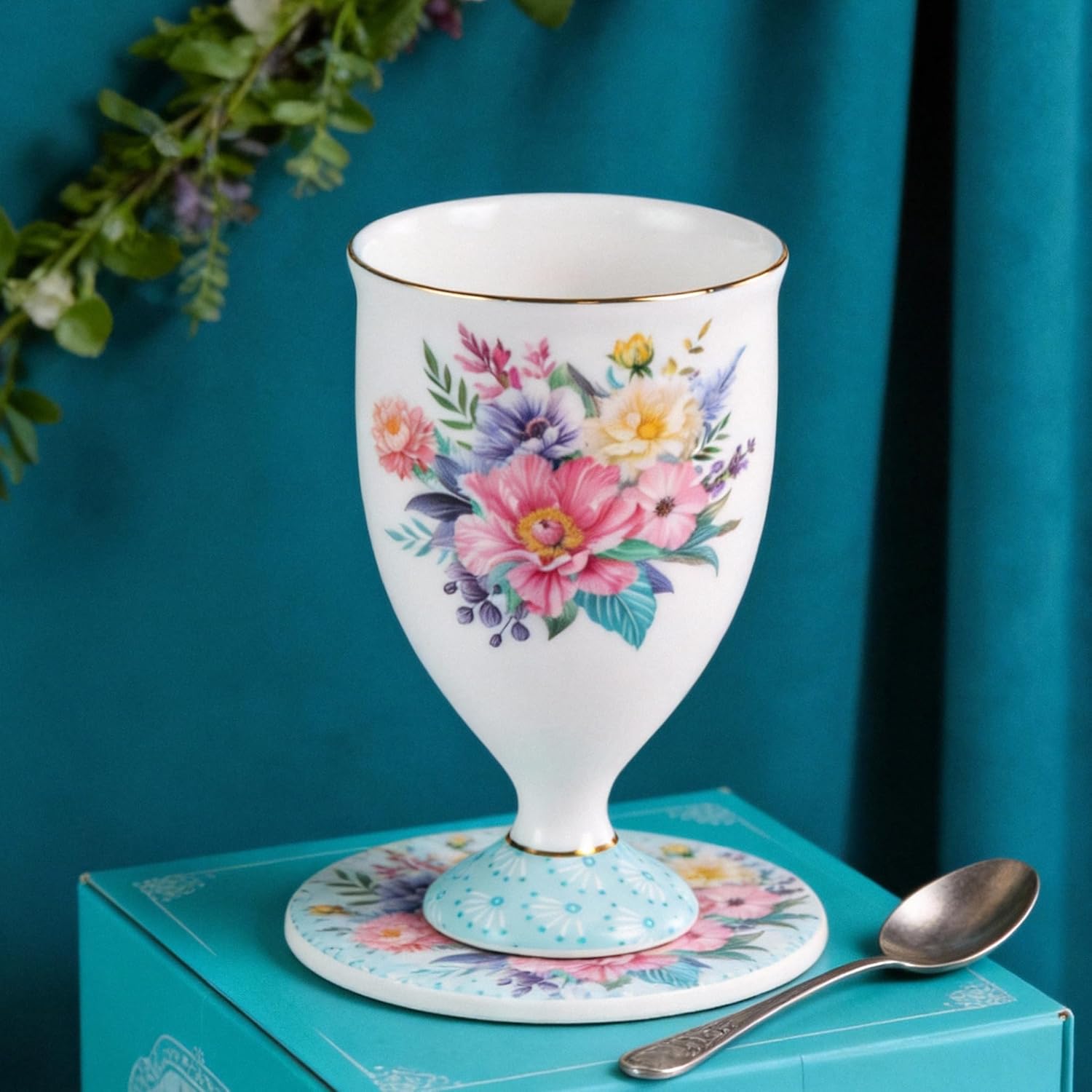 6.76 oz
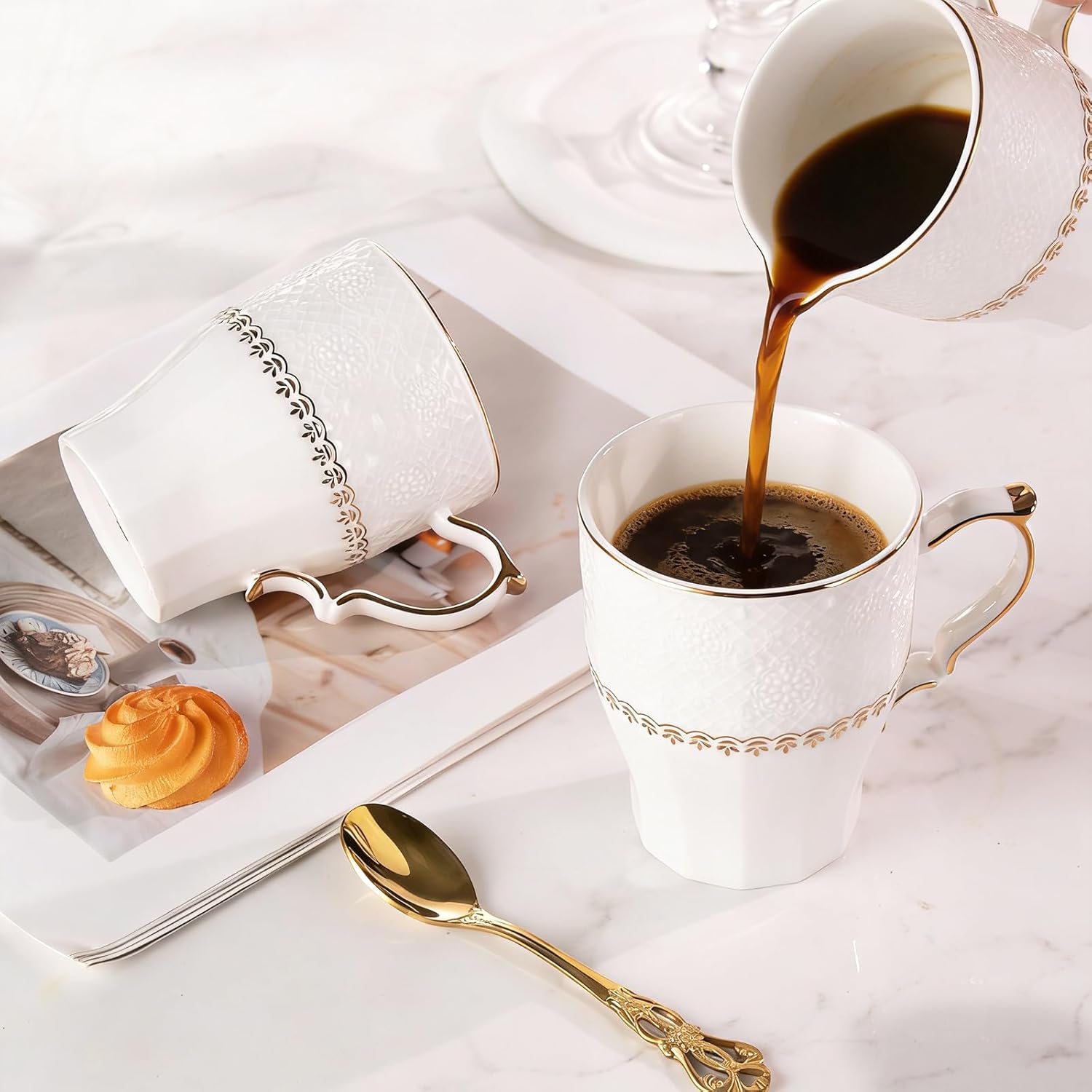 9.8 oz / 290 mL13.5 oz / 400 mL
 20 oz
20 ozNote: Product photography is not shown to a common scale. Compare the listed capacities, not the apparent mug size in each image.
| KAMMAK example | Listed capacity | Product-page material wording | Size role |
|---|---|---|---|
| Bone china mugs, set of 2 | 6.76 oz | Premium bone china | Compact |
| Coffee mugs, set of 2 | 9.8 oz / about 290 mL | Reinforced porcelain | Everyday |
| Ceramic coffee mugs, set of 2 | 10.14 oz / 300 mL | Ceramic | Everyday |
| Floral ceramic mugs, set of 2 | 13.5 oz / 400 mL | Ceramic | Large |
| Tall bone china cups, set of 2 | 14.8 oz | Fine bone china | Large |
| Tall coffee mugs, set of 2 | 20 oz | Premium reinforced porcelain | Oversized |
These figures are the capacities listed on the current product pages; they are not results from a KAMMAK fill test. Product photography may also use different scales, so compare the stated capacity rather than judging volume from image size.
Compact: 6.76 oz
The 6.76 oz bone china mug set sits below the common 8–12 oz shopping range. It is a useful reference when you deliberately want a smaller vessel rather than a long drink.
Everyday: 9.8–10.14 oz
The 9.8 oz reinforced-porcelain mug set and 10.14 oz ceramic mug set fall near the middle of the everyday range. Their pages also state about 290 mL and 300 mL respectively.
Large: 13.5–14.8 oz
If the finished drink needs more room, compare the 13.5 oz floral ceramic mugs with the 14.8 oz tall bone china cups. The actual pouring level should still leave headspace.
Oversized: 20 oz
The 20 oz tall reinforced-porcelain coffee mugs represent the oversized end of this sample. Check dimensions, storage needs, and clearance under your coffee equipment before choosing any large mug.
KAMMAK’s category includes several ceramic bodies, including porcelain and bone china. If material is your next decision after capacity, the bone china and porcelain guide explains that separate comparison.
How to choose the right coffee mug size
Start with the finished drink
Count everything that will be in the mug. Milk, foam, syrup, or ice makes the finished volume larger than the initial coffee pour. If you make the same drink each morning, measure it once in a liquid measuring jug.
Decide on headspace
A mug filled to the brim is hard to carry and leaves no room for additions. Compare products by listed capacity, but plan to pour less than that amount in normal use.
Choose your refill rhythm
A compact mug suits a fresh refill or shorter coffee. A larger mug is convenient when you want to sit down with one longer drink. Capacity changes the routine; it does not make one mug universally better.
Check physical fit
Compare height, diameter, base, and handle space with your coffee maker and cabinet. Ounces describe volume, not whether a mug fits your equipment or feels comfortable when full.
Before buying, check:
- clearance under your coffee maker;
- cabinet or shelf height;
- the space needed for the handle;
- whether the base suits the surface or accessory you use; and
- how comfortable the mug may be when filled.
More liquid means more weight. If you prefer a lighter hold, a smaller capacity may be the more comfortable starting point. Review product dimensions and handle shape separately because ounces alone cannot answer that question.
Listed capacity vs. the amount you actually pour
Product capacity is a comparison figure for the vessel, while an everyday pour usually stops below the rim. The difference is headspace.
Headspace helps when carrying the mug and gives milk or foam somewhere to go. The amount you leave is personal and depends on shape. A wide vessel and a tall, narrow vessel can behave differently even at the same listed capacity.
There is no responsible universal formula for usable capacity because mug shapes and personal preferences vary. KAMMAK has not published a measured comfortable-pour figure for the products in this article, so this guide does not invent one.
Coffee cup, coffee mug, and measuring cup: are they the same?
No. A U.S. customary measuring cup is a unit equal to 8 U.S. fl oz, or about 237 mL. A coffee mug is a drinking vessel whose capacity can be smaller or much larger than that unit. The word cup in a recipe does not tell you the capacity of your favorite mug.
Coffee cup and coffee mug are also used loosely in shopping language. A cup may be paired with a saucer, while a mug often has a more substantial everyday form, but the names do not create a reliable capacity boundary. If you are choosing a smaller vessel specifically for tea service, use the separate Tea Cup Size Guide rather than treating coffee and tea terms as interchangeable.
You can also browse coffee cups and saucers when a coordinated place setting matters more than maximum mug capacity.
Coffee mug size FAQ
Is a standard coffee mug 8 oz or 12 oz?
Both sizes appear in the everyday market, but 8–12 U.S. fl oz is a more useful shopping range than one fixed number. A 12 oz mug is a common practical reference, not an official universal standard.
How many milliliters are in a 12 oz coffee mug?
Twelve U.S. fluid ounces is approximately 355 mL. Confirm that a listing uses U.S. fluid ounces before applying the conversion.
Is a 15 or 16 oz coffee mug considered large?
In many consumer size guides, 15–16 oz sits above the everyday 8–12 oz band and is reasonably described as large. Retail labels vary, so compare the numerical capacity rather than relying on the word large.
What size should I choose if I add milk or foam?
Estimate the final drink volume after additions, then choose a mug with extra headspace. If the finished drink is close to 12 oz, a mug listed at exactly 12 oz may leave too little room for comfortable carrying or foam.
Is a coffee mug the same as one measuring cup?
No. One U.S. measuring cup is 8 U.S. fl oz, while a coffee mug can have many capacities. Use a proper measuring jug or cup when a recipe requires a volume measurement.
Is a 20 oz coffee mug oversized?
It is reasonable to call 20 oz oversized relative to the common 8–12 oz shopping range. That can still suit your routine; it simply makes machine clearance, storage, filled weight, and preferred drink volume especially important.
How can I measure a mug with no size label?
Place it on a level surface, add water to your normal drinking level, and pour the water into a liquid measuring jug. If you also test to the brim, label the two results separately.
Find your daily pour
Choose a mug that fits your coffee routine
Use 8–12 oz as a starting range, then adjust for additions, refills, equipment clearance, storage, and how the filled mug feels in your hand. The word standard can begin the search; the actual numbers should finish it.
Explore KAMMAK ceramic mugs and cups